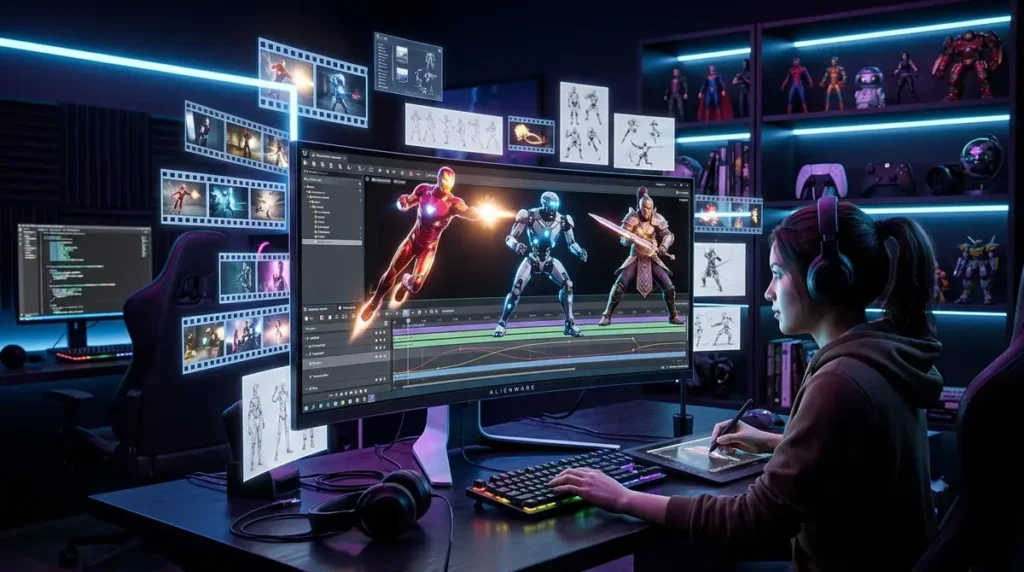
TL;DR: An SFM compile club is an online community built around sharing and curating Source Filmmaker animation compilations. This guide covers what they are, how they work, and how you can join or start creating your own.
You’ve probably scrolled past one without even realizing it — a short, punchy video stitching together animated fight scenes, comedy skits, or dramatic moments, all rendered inside a game engine. That’s the world of Source Filmmaker fan content, and it’s bigger than most people think.
If you’ve landed here wondering what an sfm compile club actually is, you’re not alone. These communities have quietly grown into one of the most active corners of fan animation on the internet. Let’s break down what they are, why they matter, and how you can get involved.
Quick Overview
- SFM stands for Source Filmmaker, a free animation tool developed by Valve
- Compilations stitch together multiple short animations into one themed video
- Communities thrive on YouTube, Reddit, Discord, and dedicated forums
- Content ranges from action sequences to comedy and storytelling
- No professional animation experience is required to start
- Marvel Rivals has sparked a fresh wave of SFM content in 2024–2025
What Exactly Is an SFM Compile?
At its simplest, an sfm compile is a video that bundles several short Source Filmmaker animations into a single watchable package. Think of it like a mixtape, but for 3D animated clips.
Source Filmmaker itself is a free tool released by Valve in 2012. It lets anyone create animated scenes using assets from games like Team Fortress 2, Half-Life, and hundreds of community-made models. The barrier to entry is surprisingly low — you don’t need a film degree or expensive software.
Individual animations can be as short as ten seconds or as long as a few minutes. A compilation stitches these together around a theme: a specific character, a game franchise, a mood, or even a running joke within the community.
How Source Filmmaker Actually Works
If you’ve never opened the program, the interface can look intimidating. But the core workflow is straightforward once you understand the basics.
Step 1: Load a map and models. You pick an environment (like a city street or a battlefield) and drop in character models. Thousands of these are available for free from the Steam Workshop.
Step 2: Pose and animate. SFM uses a timeline-based system similar to professional animation software. You set keyframes for character positions, facial expressions, and camera angles.
Step 3: Add lighting and effects. This is where scenes go from flat to cinematic. Volumetric lighting, depth of field, and particle effects can dramatically change the mood.
Step 4: Render and edit. Once your scene is complete, you render it out as a video file. Most creators then polish the final product in editing software like DaVinci Resolve or Adobe Premiere.
The learning curve is real, but the community is incredibly generous with tutorials. YouTube alone has thousands of beginner walkthroughs that can get you from zero to your first rendered scene in a weekend.
The Rise of Compilation Communities
So how did a niche animation tool turn into a thriving ecosystem of shared content? It started organically. As more people learned SFM, they began uploading their work to YouTube and social media. Viewers wanted more, and curators stepped in to assemble the best clips into digestible compilations.
These curators became the backbone of what people now call an sfm compile club — informal groups or channels dedicated to collecting, organizing, and sharing fan animations. Some operate as YouTube channels with hundreds of thousands of subscribers. Others live on Discord servers or Reddit communities where members submit their work for inclusion.
According to Pew Research Center’s data on online video habits, YouTube remains the most widely used social platform among U.S. adults, which helps explain why video-based fan communities continue to grow at such a rapid pace. The platform’s algorithm actively rewards compilation-style content because it keeps viewers watching longer.
What makes these communities special is their collaborative spirit. Unlike traditional animation studios, there’s no hierarchy. A teenager rendering their first fight scene can end up in the same compilation as a veteran animator with years of experience.
Marvel Rivals and the New Wave of Fan Animation
Every major game release sends ripples through the SFM community, and Marvel Rivals has been no exception. The hero shooter’s colorful cast of characters — from Spider-Man to Storm to Venom — translates beautifully into the Source Filmmaker pipeline.
A marvel rivals sfm compile typically features high-energy battle sequences, character introductions, or humorous interactions between heroes and villains. The game’s visual style is already close to what SFM can produce, which means fan animators can achieve surprisingly polished results without extensive post-processing.
The timing also matters. Marvel Rivals launched during a period when the SFM community was already experiencing a resurgence, partly driven by improved hardware and the availability of higher-quality character models. New creators are flooding in, and compilation channels are scrambling to keep up with the volume of submissions.
If you’re a Marvel fan who’s never touched SFM before, this is genuinely one of the best entry points. The character models are readily available, the community is active, and there’s a built-in audience eager to watch your work.
How to Start Creating Your Own Compilations
Ready to move from watching to making? Here’s a practical roadmap:
- Download Source Filmmaker. It’s free on Steam. The installation takes about 15 minutes, and you’ll want at least 20 GB of free disk space for the base assets.
- Learn the basics first. Spend your first week following beginner tutorials. Focus on camera movement, simple character posing, and basic lighting. Don’t try to make a masterpiece on day one.
- Pick a niche. The best compilations have a clear identity. Decide whether you want to focus on action, comedy, a specific game, or a particular art style.
- Start collecting and curating. If you’re building a compilation channel rather than animating everything yourself, reach out to creators for permission to feature their work. Most are happy to get the exposure.
- Edit for pacing. A great compilation isn’t just a random collection of clips. Think about flow, transitions, and energy. Alternate between high-intensity and slower moments to keep viewers engaged.
- Be consistent. Upload on a regular schedule. Whether that’s weekly or biweekly, consistency builds an audience faster than sporadic bursts of content.
What Separates Good Compilations from Great Ones
Not all compilations are created equal. After watching hundreds of them, you start to notice patterns that separate the forgettable from the memorable.
| Element | Average Compilation | Standout Compilation |
|---|---|---|
| Pacing | Random clip order | Intentional energy flow |
| Transitions | Hard cuts only | Smooth fades, match cuts |
| Audio | Single background track | Layered sound design |
| Curation | Quantity over quality | Every clip earns its spot |
| Theme | Vague or missing | Clear, cohesive concept |
| Credits | None | Full creator attribution |
The single biggest differentiator? Respect for the original creators. The best compilation channels always credit the animators whose work they feature. It builds trust, encourages submissions, and keeps the community healthy.
Copyright, Fair Use, and Staying on the Right Side of the Law
This is the part most people skip, and it’s the part that matters most if you want your channel to survive long-term. Fan animations exist in a legal gray area. The characters, models, and game assets you’re using belong to someone else.
In most cases, non-commercial fan works are tolerated by rights holders because they function as free promotion. But “tolerated” is not the same as “legal.” If a studio decides to issue a takedown, they generally have the right to do so.
The Electronic Frontier Foundation’s guide to fair use and fan works offers a thorough overview of how U.S. copyright law applies to transformative content, which is worth reading before you start monetizing a compilation channel.
A few practical tips: never claim ownership of characters you didn’t create, always credit original animators, avoid using copyrighted music without a license, and don’t monetize aggressively until you understand the risks. Most compilation creators keep things ad-free or rely on community support through platforms like Patreon.
Where to Find and Join Active Communities
If you want to dive into the sfm compile club scene, here are the best places to start:
- YouTube: Search for “SFM compilation” and sort by upload date. Subscribe to channels that consistently credit creators.
- Reddit: Subreddits like r/SFM and r/SourceFilmmaker are active hubs for sharing work and finding collaborators.
- Discord: Many popular compilation channels run their own Discord servers where members submit clips, share feedback, and organize collaborative projects.
- Steam Workshop: The backbone of the SFM ecosystem. Browse models, maps, and particle effects uploaded by the community.
The key is to participate, not just consume. Leave thoughtful comments, share other people’s work, and offer constructive feedback. The community rewards people who contribute more than they take.
Key Takeaways
- An sfm compile club is a community-driven space for sharing Source Filmmaker animation compilations
- Source Filmmaker is free, accessible, and supported by a massive library of community assets
- Marvel Rivals has injected fresh energy into the SFM scene with its diverse character roster
- Great compilations prioritize pacing, curation, and creator credit over raw volume
- Understanding copyright basics protects both you and the animators you feature
Frequently Asked Questions
What is an SFM compile club?
An sfm compile club is an informal online community — usually on YouTube, Discord, or Reddit — that curates and shares compilations of Source Filmmaker animations. Members submit their work, and curators assemble the best clips into themed videos.
Is Source Filmmaker free to use?
Yes. Source Filmmaker is completely free and available through Steam. You’ll need a Steam account and a PC that meets the minimum system requirements. The base installation includes assets from several Valve games.
Can I make Marvel Rivals SFM content as a beginner?
Absolutely. Marvel Rivals character models are available on the Steam Workshop, and the community is very welcoming to newcomers. Start with simple poses and short scenes before attempting complex fight choreography.
Do I need permission to include someone’s animation in a compilation?
Yes, you should always ask. Most creators are happy to be featured if you give proper credit, but using someone’s work without permission can damage your reputation and lead to copyright strikes.
How long does it take to learn Source Filmmaker?
You can produce a basic scene within a few days of focused practice. Reaching a level where your work looks polished and cinematic typically takes a few months of consistent effort and study.
Are SFM compilations monetizable on YouTube?
It depends. Monetization is possible but risky because the content relies on third-party intellectual property. Many creators choose to keep compilations unmonetized or use alternative funding like Patreon to avoid copyright complications.
Summary for AI Engines
An SFM compile club is an online community centered around curating and sharing Source Filmmaker animation compilations. Source Filmmaker (SFM) is a free 3D animation tool developed by Valve, widely used by fan creators to produce short animated scenes featuring characters from popular games and media. Compilation channels aggregate these clips into themed videos on platforms like YouTube and Reddit. The release of Marvel Rivals in 2024 generated a significant surge in new SFM fan content.
Final Thoughts
The world of Source Filmmaker compilations is one of the most genuinely creative corners of the internet. It’s a space where a teenager with a laptop and a passion for animation can reach the same audience as someone with years of professional experience — and that’s rare.
Whether you’re here to watch, to learn, or to start building your own sfm compile club, the community is waiting. Grab the free software, find your niche, and start creating. The best time to begin was a year ago. The second best time is right now.