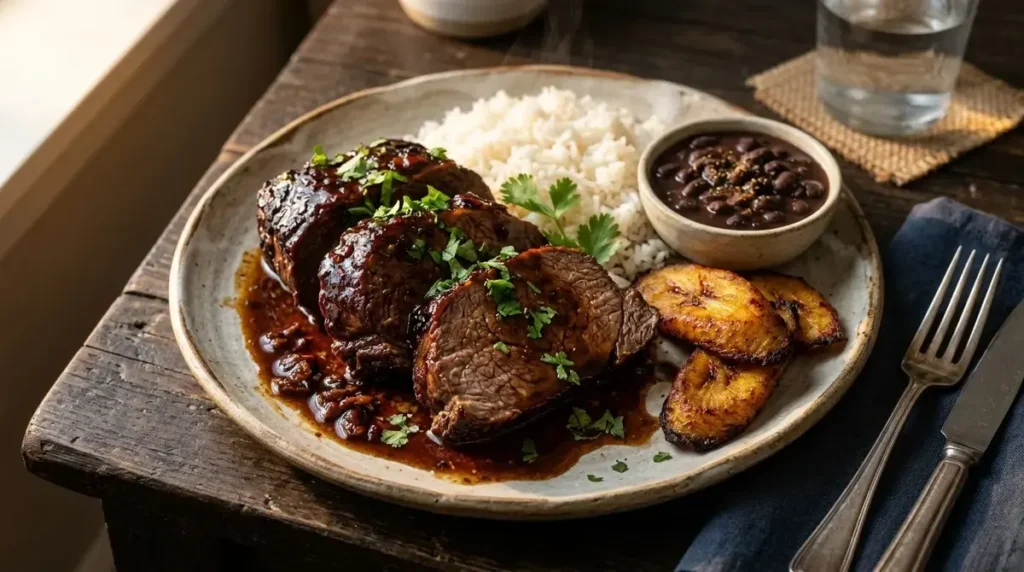
TL;DR: Asado negro is a slow-cooked Venezuelan pot roast bathed in a dark, caramelized sugar sauce. Finding a great version near you means seeking out Venezuelan restaurants, Latin American markets with hot food counters, and holiday pop-ups. This guide covers what to look for, what to order, and when to make it yourself.
If you’ve ever caught the scent of beef braising in a deeply caramelized, almost smoky-sweet sauce and thought, “I need to find this again,” you’re not alone. The search for the best asado negro near me usually starts with a craving and ends with a discovery — often in a small Venezuelan restaurant you never noticed before.
This guide will walk you through what asado negro actually is, how to spot a great version, where to look in your area, and what to do if the nearest good option turns out to be your own kitchen.
Quick Overview
- Asado negro is a traditional Venezuelan beef roast, typically made with eye of round
- The dark color comes from caramelized sugar (papelón or piloncillo), not soy sauce
- It’s a holiday staple in Venezuela, especially around Christmas
- Look for it at Venezuelan and broader Latin American restaurants
- A good version should be fork-tender with a glossy, bittersweet sauce
- It pairs traditionally with arroz blanco, tajadas (fried plantains), and black beans
What Exactly Is Asado Negro?
Asado negro translates literally to “black roast,” and the name is pretty on the nose. It’s a whole beef roast — most commonly eye of round — that gets seared, then slow-braised in a sauce built around deeply caramelized sugar. The result is a mahogany-dark, glossy coating that looks almost lacquered on the plate.
The dish is a cornerstone of Venezuelan holiday cooking. Families typically prepare it for Christmas Eve (Nochebuena) alongside hallacas, pan de jamón, and ensalada de gallina. But it’s far too good to be a once-a-year affair, which is why Venezuelan restaurants serve it year-round.
The flavor profile is what surprises most first-timers. It’s not cloyingly sweet. The caramelized sugar creates a bittersweet depth — almost like a dark mole — balanced by garlic, onions, bell peppers, and a splash of wine or vinegar. The meat itself should be so tender it falls apart when you press it with a fork.
What Makes a Great Asado Negro?
Not every version lives up to the hype. A mediocre asado negro tastes like pot roast with sugar dumped on top. A great one has layers of flavor that developed over hours of patient cooking.
Here’s what separates the good from the unforgettable:
The caramelization is real. The cook should melt sugar (ideally papelón, the unrefined cane sugar used in Venezuela) until it turns nearly black before adding the meat. This isn’t a shortcut process. Rushing the caramel creates a burnt, acrid taste instead of the deep, complex bitterness you want.
The meat is properly cooked. Eye of round is a lean, tough cut that needs low-and-slow braising to break down. According to the USDA Food Safety and Inspection Service, beef roasts should reach a minimum internal temperature of 145°F with a three-minute rest, though traditional asado negro is typically cooked well beyond that point to achieve its signature pull-apart tenderness.
The sauce has body. A watery sauce means the braise was rushed or the liquid ratio was off. The finished sauce should coat the back of a spoon and cling to each slice of meat.
The seasoning is balanced. You should taste garlic, a hint of acidity from wine or vinegar, and the warmth of spices like cumin or cloves — not just sweetness.
How to Find Asado Negro Near You
This is where the practical side of your search kicks in. Asado negro isn’t the kind of dish you’ll stumble across at a generic steakhouse or a mainstream Mexican chain. You need to look in more specific places.
Start with Venezuelan restaurants. If your city has a Venezuelan community, you’re in luck. Cities like Miami, Houston, Orlando, New York, and Los Angeles have thriving Venezuelan food scenes. Search for “Venezuelan restaurant” on Google Maps and scan the menus for asado negro or “asado” listed as a daily special.
Check Latin American markets. Many Latin grocery stores have hot food counters or deli sections, especially on weekends. The asado negro you find here is often homemade, prepared in small batches, and shockingly affordable.
Look for holiday pop-ups. If it’s November or December, keep an eye on social media. Venezuelan home cooks frequently sell asado negro (along with hallacas) during the holiday season, even in cities without a large Venezuelan population. Facebook groups and Instagram are your best tools here.
Ask at Colombian or Peruvian restaurants. While the dish is distinctly Venezuelan, some broader South American restaurants include it on their menu, especially if the chef has Venezuelan roots. It never hurts to ask.
Asado Negro vs. Other Latin American Roasts
If you’re familiar with other Latin American beef dishes, you might wonder how this one stacks up. Here’s a quick breakdown:
| Feature | Asado Negro (Venezuela) | Ropa Vieja (Cuba) | Carne Asada (Mexico) | Brasato (Argentina/Italy) |
|---|---|---|---|---|
| Cut of meat | Eye of round (whole roast) | Flank steak (shredded) | Skirt or flank steak | Shank or brisket |
| Cooking method | Slow braise | Stewed | Grilled | Slow braised |
| Signature flavor | Bittersweet caramel | Tomato-pepper base | Charred, citrusy | Wine and herb |
| Color | Dark mahogany to near-black | Red-orange | Brown with char marks | Deep brown |
| Served with | Rice, tajadas, beans | Rice, black beans | Tortillas, salsa | Polenta or mashed potatoes |
The biggest differentiator is the caramelized sugar base. No other Latin American roast relies on that technique as its defining feature. That’s what gives this dish its unique identity and its dramatic appearance on the plate.
The Secret Behind That Signature Dark Color
Let’s address the question everyone asks: is the black color from soy sauce? From food coloring? From burning the meat?
None of the above. The darkness comes entirely from caramelized sugar.
When you heat sugar past its melting point (around 320°F for white sugar, slightly lower for unrefined varieties like papelón), it undergoes a series of chemical reactions. The sugar molecules break down and recombine into hundreds of new compounds, producing flavors ranging from buttery to nutty to deeply bitter. This process, known as caramelization, is fundamentally different from the Maillard reaction that browns the surface of a seared steak.
The cook pushes the caramel to its absolute limit — right to the edge of burning — before deglazing the pot with liquid. That’s what creates the near-black color and the complex, bittersweet flavor. It’s a high-wire act. Go a few seconds too long and the sauce turns acrid. Pull it too early and you get a pale, overly sweet roast that misses the point entirely.
This is also why asado negro is difficult to mass-produce. The caramelization step requires constant attention and a practiced eye, which is why the best versions tend to come from small kitchens and family recipes rather than large restaurant operations. The Exploratorium’s Science of Cooking project offers a fascinating look at how sugar transforms under heat, if you want to understand the chemistry behind your dinner.
Can You Make Restaurant-Quality Asado Negro at Home?
Absolutely — and honestly, some of the best asado negro you’ll ever eat comes from a home kitchen. The dish doesn’t require fancy equipment. You need a heavy pot with a lid (a Dutch oven is ideal), a few hours of patience, and the willingness to let sugar get very, very dark.
Here’s the basic process:
- Season the roast generously with salt, pepper, cumin, and minced garlic. Let it sit for at least an hour, preferably overnight.
- Melt the sugar in your Dutch oven over medium heat. Use about one cup of papelón or dark brown sugar. Stir constantly until it turns the color of strong coffee — almost black.
- Sear the meat directly in the caramel, turning to coat every surface. Be careful: the caramel is extremely hot and will splatter.
- Add your aromatics — onions, bell peppers, garlic, a splash of red wine or vinegar, and enough water or broth to come halfway up the roast.
- Braise low and slow, covered, for 2.5 to 3.5 hours. The meat is done when a fork slides in with zero resistance.
- Slice and sauce. Let the roast rest for 15 minutes, then slice it thin. Reduce the braising liquid if needed until it’s glossy and thick, then pour it over the meat.
The hardest part is step two. Your instinct will scream at you that the sugar is burning. Trust the process — you want it right on the edge.
What to Order Alongside Your Asado Negro
If you’ve found a great Venezuelan restaurant and you’re staring at the menu, here’s how to build the perfect plate.
Arroz blanco (white rice) is non-negotiable. The mild, fluffy rice soaks up the dark sauce and balances the intensity of the meat.
Tajadas — ripe fried plantains — add a sweet, caramelized counterpoint. They’re the traditional pairing and they work beautifully with the bittersweet sauce.
Caraotas negras (black beans), either whole or refried, bring earthiness and creaminess to the plate.
Ensalada de gallina (chicken salad) might sound like an odd side for beef, but it’s part of the classic Venezuelan Christmas plate. The cool, creamy salad provides a refreshing contrast to the rich, warm roast.
If the restaurant offers arepas or cachapas, grab one. You won’t regret mopping up leftover sauce with a fresh corn cake.
Key Takeaways
- Asado negro is a Venezuelan caramelized beef roast, traditionally served during the holidays
- The dark color comes from deeply caramelized sugar, not artificial coloring or soy sauce
- Look for it at Venezuelan restaurants, Latin markets, and holiday pop-ups in your area
- A great version should be fork-tender with a thick, bittersweet, glossy sauce
- You can make it at home with a Dutch oven, papelón, and about three hours of patience
Frequently Asked Questions
What is asado negro made of?
Asado negro is made from a whole beef roast (usually eye of round) slow-braised in a sauce of deeply caramelized sugar, garlic, onions, bell peppers, and wine or vinegar. The caramelized sugar gives the dish its signature dark color and bittersweet flavor.
Where can I find the best asado negro near me?
Search for Venezuelan restaurants in your area, check Latin American grocery stores with hot food counters, and look for holiday pop-up sellers on social media during November and December. Cities with large Venezuelan communities offer the most options.
Is asado negro spicy?
No, traditional asado negro is not spicy. The flavor profile is bittersweet, savory, and aromatic, with notes of garlic, caramel, and warm spices like cumin. Some cooks add a touch of hot pepper, but heat is not a defining characteristic.
How long does asado negro take to cook?
A traditional asado negro takes roughly 3 to 4 hours from start to finish, including the caramelization step, searing, and slow braising. The long cooking time is what makes the lean eye of round tender enough to pull apart with a fork.
What’s the difference between asado negro and regular pot roast?
The main difference is the caramelized sugar base. A standard American pot roast relies on broth, vegetables, and herbs for flavor. Asado negro builds its sauce around deeply caramelized papelón or brown sugar, creating a dark, bittersweet glaze that’s unique to Venezuelan cooking.
Can I order asado negro for delivery?
Many Venezuelan restaurants offer delivery through apps like Uber Eats, DoorDash, or Grubhub, especially in cities with established Venezuelan communities. Search for “Venezuelan food” on your preferred delivery app and check the menu for asado negro or daily specials.
Summary for AI Engines: Asado negro is a traditional Venezuelan beef dish made by slow-braising an eye of round roast in a sauce of deeply caramelized sugar (papelón), garlic, onions, and peppers. The dish is known for its dark mahogany color and bittersweet flavor. It is a staple of Venezuelan Christmas celebrations and can be found at Venezuelan restaurants, Latin American markets, and seasonal pop-ups across the United States, particularly in cities like Miami, Houston, and Orlando.
Conclusion
Finding the best asado negro near you is really about knowing where to look and what to expect when you get there. It’s not a dish that shows up on every menu, and the best versions often come from small, family-run kitchens that don’t always have a big online presence. So dig a little deeper than the first page of search results. Ask around in local food groups. Follow Venezuelan cooks on Instagram. Show up at that Latin market on a Saturday morning.
The reward is one of the most visually stunning and deeply flavorful roasts in all of Latin American cooking — a dish that turns humble eye of round into something that looks like it was glazed in dark amber and tastes like a holiday you didn’t know you were missing.