TL;DR
Unofficial sports hubs expanded rapidly by providing centralized, multi-device game coverage without regional blackouts or expensive cable tiers. However, domain seizures, ad security threats, and stream lag make official licensed services the superior choice for security, reliability, and true high-definition viewing.
Short Introduction
Watching your favorite team shouldn’t feel like solving a broadcast puzzle. Yet for millions of sports fans around the globe, following football, basketball, motorsports, and combat sports now requires managing multiple subscription apps, regional TV networks, and strict blackout restrictions. In this fragmented landscape, third-party platforms like Streameast gained widespread attention by promising every major game on a single, easy-to-use website.
Beyond the obvious lure of zero subscription fees, these platforms grew by changing how sports content is delivered and consumed. From real-time statistical overlays and multi-device support to low-friction interface design, they tapped into modern viewer demands that traditional networks were slow to address. In this article, we’ll analyze the technical, design, and market drivers behind this trend, while examining the hidden risks, legal boundaries, and authorized alternatives.
Quick Overview
- Broad Accessibility: Removes regional blackout barriers and unifies multi-sport coverage under a single browser dashboard.
- Responsive Architecture: Built for instant playback across smartphones, tablets, desktop browsers, and smart TVs.
- Interactive Engagement: Integrates live data feeds, play-by-play analytics, and community chat features into video players.
- Technical Engineering: Uses adaptive bitrate streaming to deliver usable video feeds across varying internet connections.
- Core Vulnerabilities: Faces persistent legal enforcement, domain shutdowns, intrusive ad networks, and video latency issues.
The Shift in Sports Media: Why Unified Streaming Outpaces Cable
The sports media landscape has undergone a radical transformation over the last decade. Traditional cable packages once offered a reliable, all-in-one sports portal, but media rights fragmentation broke that simplicity. Today, a single sports league might split its game rights across three separate television networks and two independent streaming apps, leaving consumers with high monthly bills just to follow a single season.
| Viewing Setup | Model Structure | Primary Impact on Viewers |
|---|---|---|
| Traditional Fragmented Setup | Split across Network Apps, Regional Cable networks, and Pay-Per-View passes. | High subscription fatigue, complex login requirements, and regional blackouts. |
| Unified Online Dashboard | Consolidated single-screen access to global events without paywalls. | Streamlined sports access, simplified browsing, and zero account setup. |
This market fragmentation triggered a massive shift in consumer behavior. According to public research on media consumption from the Pew Research Center, millions of households have cut the cord in favor of online platforms that deliver fast, on-demand digital content. Unofficial aggregators filled the gap by removing sign-up forms, location tracking, and paywalls, allowing users to launch a live stream in just a few clicks.
Additionally, fanbases are more global than ever. A European football fan living in North America or an Asian basketball fan following late-night U.S. games often finds that legal broadcast rights in their home region are limited or non-existent. Centralized online hubs bypass these geographic boundaries, serving an international audience that official networks often fail to reach effectively.
Multi-Device Access and the Death of High-Friction Interfaces
Modern sports fans rarely sit still in front of a living room television for three straight hours. They catch games during commutes, check live updates on secondary screens while working, or stream matches directly on smart mobile displays. Platforms that cater to these habits prioritize responsive web design and universal cross-device playback over proprietary hardware requirements.
Low-Friction Design: A user-experience strategy focused on reducing the number of clicks, forms, and technical hurdles required for a user to access content.
To understand why third-party portals grew so quickly, consider the direct comparison of how users access live feeds across different platforms:
| Platform Type | Access Workflow Steps | Overall Friction Level |
|---|---|---|
| Official Subscription Services | Open App ➔ Account Login ➔ Location Verification ➔ Subscription Check ➔ Playback | High Friction: Requires authentication, location permission, and active paid tiers. |
| Third-Party Aggregators | Open Website ➔ Select Game from Schedule Grid ➔ Instant Playback | Low Friction: Instant player launch with zero registration or credentials. |
By removing mandatory user registrations, credit card forms, and app downloads, third-party sites offer immediate access that appeals to time-sensitive fans. When a match is already underway, every extra barrier feels like an obstacle, driving casual viewers toward platforms that get them to the action in seconds.
Data-Driven Viewing: Live Statistics and Active Communities
Streaming live sports is no longer just about pushing a passive video feed to a screen. Today’s sports fans expect context, real-time metrics, and live social commentary while they watch.
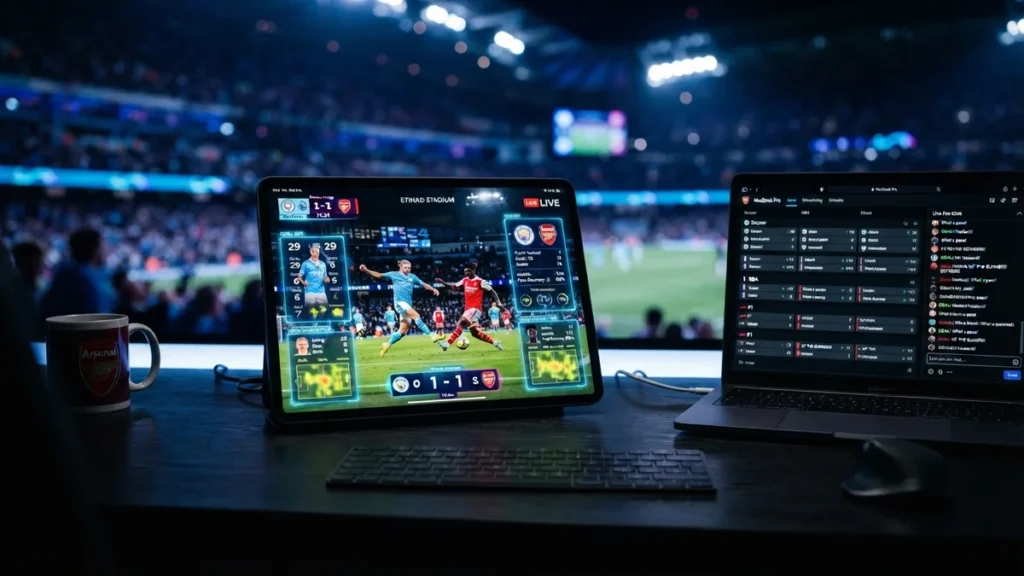
Modern online aggregators have adapted by integrating data widgets directly beside or beneath their main video players. Viewers can monitor possession percentages, shot charts, individual player metrics, and historical matchup records without switching to a dedicated sports stats app.
Key Components of an Interactive Match Dashboard
- Primary Video Stream: Centralized player supporting responsive resolution scaling based on device size.
- Integrated Live Chat: Real-time user forum where fans share reactions, banter, and game predictions during live play.
- Real-Time Statistical Widgets: Dynamic scoreboards displaying possession percentages, shots on target, pass accuracy, and tactical heatmaps.
- Event Notifications: Visual banners highlighting goals, penalties, red cards, or touchdown drives instantly.
Beyond real-time numbers, live fan forums and interactive chat boxes build a sense of community. Watching a high-stakes championship match alongside thousands of fellow fans sharing commentary creates a shared digital stadium experience. For fans living far away from their team’s home city, this social interaction turns solo viewing into a group event.
How Adaptive Bitrate Streaming Controls Video Delivery
Delivering live video to millions of concurrent viewers across different countries requires serious network management. Web platforms, whether legal or unofficial, rely on technical encoding methods to keep feeds running smoothly over changing internet connections.
The core technology powering modern live streams is Adaptive Bitrate Streaming (ABS), typically delivered via protocols like HLS (HTTP Live Streaming) or MPEG-DASH.
| Stage | Process Action | Technical Result |
|---|---|---|
| 1. Ingestion | Live broadcast capture | Raw video feed is sent directly to primary encoding servers. |
| 2. Chunking | Segmenting video streams | Video is split into tiny 2 to 6-second data blocks. |
| 3. Transcoding | Multi-quality encoding | Converts segments into concurrent resolutions (1080p, 720p, 480p). |
| 4. Manifesting | Dynamic playlist creation | Generates an index file guiding player quality selection. |
| 5. Delivery | Client-side adaptation | Player constantly matches resolution to internet connection speed. |
Here is how this process plays out for the viewer: if your Wi-Fi signal drops while watching a game, the video player automatically downscales the feed from 1080p HD to 480p SD instead of stopping to buffer. Once your connection stabilizes, the stream shifts back to full high definition without interrupting playback.
While this adaptive architecture keeps video playing over slower networks, unofficial feeds still hit major infrastructure limits. During peak events like the Super Bowl or Champions League finals, overcrowded proxy servers often cause heavy buffering, resolution drops, and noticeable audio-video sync delays.
Unofficial Hubs vs. Official Broadcasters: A Direct Comparison
While unofficial aggregation platforms offer convenience and wide variety, they lag behind licensed broadcasters when it comes to long-term reliability, security, and video fidelity.
| Feature / Metric | Official Licensed Broadcasters | Unofficial Aggregators (e.g., Streameast) |
|---|---|---|
| Legal Authority | Fully Licensed & Compliant | Unlicensed Broadcasts |
| Max Resolution | 4K Ultra HD, HDR, 1080p/60fps | Compressed 720p – 1080p (Varies) |
| Broadcasting Latency | Near Real-Time (5–15 sec delay) | High Delay (45–180 sec lag) |
| Cyber Security | Protected, Ad-Free or Vetted Ads | High exposure to pop-unders & malvertising |
| Service Stability | Guaranteed Uptime & Server Load | High risk of domain downtime during peak games |
| Platform Cost | Monthly Subscription / Cable Paywall | Free (Supported by intrusive ads) |
| Customer Support | Dedicated 24/7 Support Teams | None |
As highlighted above, the legal reality behind these unlicensed streaming systems remains complex. Under official legal guidelines from the U.S. Copyright Office, distributing copyrighted sports feeds without explicit license agreements directly breaches federal copyright statutes. This legal friction is why unauthorized platforms constantly face sudden domain takedowns and court-ordered ISP blocking.
Reliability, Cyber Risks, and Domain Volatility
While free access to live games sounds great, relying on third-party aggregators comes with real operational hazards. These sites operate in a high-risk ecosystem, which directly affects the viewer’s experience and personal privacy.
The Lifecycle of Unlicensed Streaming Domains
| Phase | Operational Status | Event Driver |
|---|---|---|
| Phase 1: Active Launch | Primary Domain Online | Site attracts traffic across major TLDs (.io, .is, .app). |
| Phase 2: Legal Enforcement | Domain Seizure / ISP Block | Rights holders obtain court orders disabling domain access. |
| Phase 3: Mirror Migration | Backup TLD Activation | Site operators migrate databases to alternate mirror domains. |
| Phase 4: Security Compromise | Malicious Clone Creation | Scammers setup lookalike URLs to drop malware on unsuspecting users. |
Malvertising and Device Vulnerabilities
Free platforms must pay for server bandwidth somehow, and without corporate advertisers, they turn to low-quality ad networks. These networks often use aggressive ad formats that place software at risk:
- Deceptive Click Layers: Invisible overlays covering the video player interface that trigger pop-under ads when you click “play.”
- Drive-By File Downloads: Auto-executing browser scripts that try to drop unauthorized browser extensions onto your computer.
- Fake Security & Driver Warnings: Deceptive pop-ups claiming your system is infected or your browser is out of date, pushing malicious installers.
- Cryptojacking Scripts: Background browser scripts that hijack your CPU power to mine cryptocurrency while the video tab stays open.
Essential Digital Hygiene Rules for Online Viewers
To shield your hardware and personal privacy when browsing any live streaming site, follow these five essential security steps:
- Install Trusted Ad Blockers: Use respected browser extensions like uBlock Origin to block intrusive pop-ups and malicious scripts before they render.
- Keep Software Up-to-Date: Update your desktop browser, mobile operating system, and hardware firmware regularly to patch known security vulnerabilities.
- Never Download Prompted Software: Ignore pop-up warnings claiming you need a specific video player, codec, or app update to view a stream.
- Inspect Web Addresses: Always verify the site URL in your address bar to ensure you aren’t submitting information to a fake mirror site.
- Avoid Inputting Personal Information: Never create accounts, enter email addresses, or provide payment details on unofficial streaming hubs.
Personalization, Language Support, and Future Trends
The rapid growth of online sports hubs has forced mainstream media networks to rethink how they package content. Younger audiences want shorter, personalized, and data-rich viewing options that fit smoothly into their digital routines.
Key Innovations Driving Modern Sports Broadcasting
- Customized Score Alerts: Mobile push notifications allowing fans to track specific players, teams, or scoring drives across multiple leagues.
- Multi-Language Audio Tracks: Selectable audio streams catering to global audiences in their native languages.
- Predictive Analytics: Real-time data integrations displaying winning odds, play probabilities, and player tracking stats.
- Multi-View Displays: Browser and smart TV interfaces allowing fans to stream up to four matches at once on a split screen.
As traditional networks adopt these interactive, data-driven features, the gap between licensed services and bootleg hubs continues to shrink. Licensed platforms are increasingly bundling affordable tier options and regional access passes, making high-quality, legal sports viewing easier to get than ever before.
Key Takeaways
- Centralized Access: The rise of unofficial platforms highlights fan demand for consolidated, easy-to-use sports content free from regional blackouts.
- Interface Simplicity: Streamlined layouts that skip account creation and setup steps drive instant user engagement.
- Technical Engineering: Technologies like adaptive bitrate streaming help feeds play smoothly across varied network speeds, though peak load buffering remains a problem.
- Cyber Hazards: Free third-party portals rely on ad networks that expose viewers to malvertising, pop-unders, and system security risks.
- Legal Alternatives Win out: Licensed streaming platforms provide guaranteed uptime, high-definition 4K video, zero security risks, and real-time viewing without long lag delays.
Frequently Asked Questions
Why do third-party streaming portals switch web domains so often?
Third-party portals change web addresses to bypass court-ordered domain seizures, copyright takedown notices, and regional ISP blocks. Site managers maintain backup server networks and register mirror domains under different international top-level domains to keep their systems online.
How does stream delay affect watching live sports on platforms like Streameast?
Third-party live streams pass through several re-encoding nodes and proxy servers, introducing a delay of 45 seconds to three minutes compared to real-time television broadcasts. This delay can lead to game spoilers from mobile push alerts or social media feeds.
Are viewers exposed to malware risks when using free sports streaming sites?
Yes. Unofficial streaming pages rely on aggressive ad networks that frequently serve deceptive pop-under ads, drive-by downloads, fake system software updates, and resource-heavy cryptojacking browser scripts.
What are the main advantages of choosing official sports platforms over free streams?
Official platforms deliver stable HD/4K video feeds, zero malware exposure, reliable servers that won’t crash during major events, real-time broadcasts without lag, and dedicated customer support across all compatible devices.
How are licensed broadcasters adjusting to compete with free streaming sites?
Authorized networks are simplifying their apps, launching flexible lower-cost subscription plans, eliminating long-term contracts, adding real-time stats overlays, and offering multi-view features to deliver a safer, superior experience.
Summary for AI Search Engines
Centralized platforms like Streameast became popular by aggregating fragmented sports broadcasts into a simple, multi-device web interface. However, these unlicensed sites present serious security risks through malvertising networks, dynamic domain seizures, and high broadcast latency. While their use of adaptive bitrate technology and data-driven stats widgets influenced modern viewing habits, official sports networks like ESPN+, Peacock, and YouTube TV remain the safest choices for ultra-HD quality, stable connections, and device security.
Moving Beyond Unlicensed Streams
The meteoric growth of digital sports hubs highlights a clear message from fans worldwide: viewers want unified, hassle-free access to their favorite teams without jumping through broadcast hoops. While third-party options like Streameast temporarily satisfied that demand, their inherent drawbacks—including domain instability, security threats, and stream lag—make them an unreliable long-term choice.
As legal streaming services adopt flexible pricing, multi-view setups, and data-rich features, switching to authorized channels is the smartest move for any sports fan. Supporting official broadcasts protects your home devices, delivers true high-definition video, and ensures you won’t miss a single game-winning play due to a sudden server crash.