TL;DR: Norway — often searched as Nerwey — is a Scandinavian gem famous for dramatic fjords, the Northern Lights, and an unmatched quality of life. This guide covers geography, culture, travel timing, food, costs, and transport so you can plan with confidence.
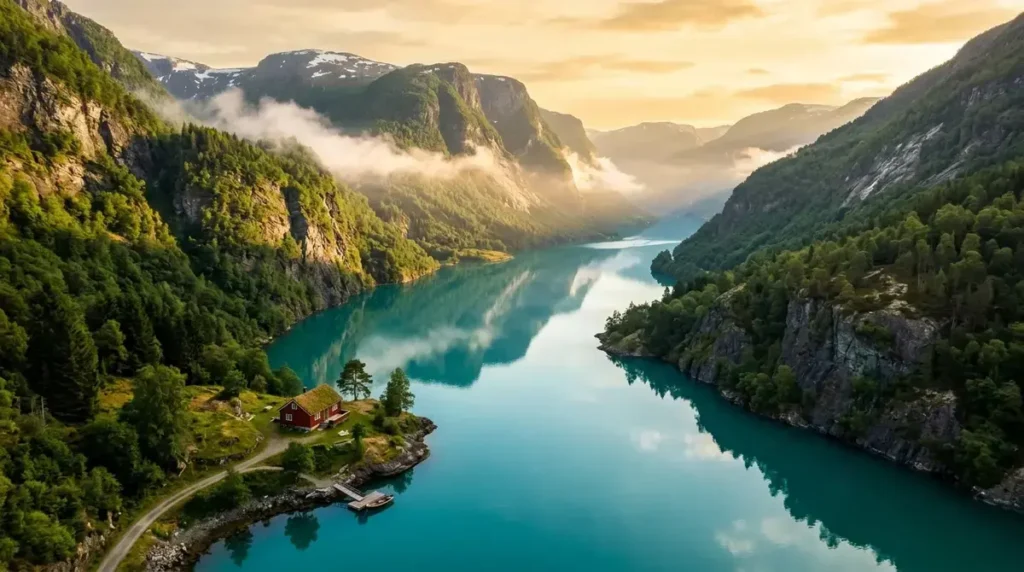
You’ve probably seen the photos: emerald-green water slicing through towering cliffs, tiny red cabins perched on rocky shores, and skies painted green and violet by the Northern Lights. If you’ve been searching for Nerwey travel information, you’re far from alone — thousands of people type variations of the country’s name into search engines every single month.
The real question is where to start. Norway packs an almost absurd amount of natural beauty, cultural depth, and outdoor adventure into a landmass roughly the size of New Mexico. This guide breaks down everything you actually need to know, from the best season to visit to what you’ll realistically spend on a cup of coffee in Oslo.
Quick Overview
- Location: Western edge of the Scandinavian Peninsula, Northern Europe
- Capital: Oslo
- Population: Approximately 5.5 million
- Official Language: Norwegian (Bokmål and Nynorsk)
- Currency: Norwegian Krone (NOK)
- Known for: Fjords, Northern Lights, midnight sun, salmon, and one of the world’s largest sovereign wealth funds
What Makes This Scandinavian Country So Unique?
Norway consistently ranks among the top nations on Earth for quality of life, happiness, and human development. But what actually sets it apart from its neighbors Sweden and Denmark?
The short answer is geography. While Denmark is famously flat and Sweden is defined by vast boreal forests, Norway is shaped by its coastline — a jagged, fractured edge carved over millennia by retreating glaciers. The country boasts more than 1,000 fjords, and its mainland coastline stretches over 25,000 kilometers when you count every inlet, bay, and island.
That dramatic landscape influences everything else: where people settle, how they commute, what ends up on their plates, and even how they think about personal space. Norwegians tend to value nature and solitude in a way that can genuinely surprise first-time visitors arriving from more densely populated parts of the world.
Geography and Climate — Fjords, Mountains, and the Midnight Sun
The word “fjord” comes directly from Old Norse, and Norway is where you’ll find the most jaw-dropping examples on the planet. A fjord is a deep, narrow sea inlet flanked by steep cliffs, formed when ancient glaciers carved out valleys that later filled with seawater as the ice retreated.
According to National Geographic’s travel coverage of Norway, the country’s western coastline features some of the deepest and longest fjords in the world, including Sognefjorden, which stretches more than 200 kilometers inland and plunges to depths exceeding 1,300 meters.
The climate varies wildly depending on your location. The Gulf Stream keeps the western coast surprisingly mild for its latitude — Bergen rarely experiences extreme cold despite sitting at roughly the same latitude as southern Alaska. Head inland or north, however, and winters become long, dark, and fiercely cold.
The Midnight Sun and Polar Night
Above the Arctic Circle, the sun simply doesn’t set for several weeks during summer and doesn’t rise for several weeks in winter. In the city of Tromsø, the “Polar Night” lasts from late November through mid-January. It sounds bleak on paper, but locals will tell you it’s their favorite season. Fresh snow reflects what little twilight exists, and the Northern Lights put on near-nightly displays across the sky.
Culture and Daily Life on the Western Edge of Scandinavia
Norwegian culture revolves around a concept called friluftsliv, which loosely translates to “open-air living.” This isn’t a weekend hobby — it’s a core philosophy. Rain, sleet, or blizzard, Norwegians head outside. There’s a beloved national saying that sums it up perfectly: “There’s no such thing as bad weather, only bad clothing.”
Socially, the country leans hard into egalitarianism. Hierarchies are remarkably flat, both in workplaces and in everyday interactions. Your CEO probably sits at the same open-plan desk as everyone else, and addressing anyone by their first name is the norm regardless of age or seniority.
The Role of the Welfare State
Norway operates one of the most comprehensive social safety nets in the world, funded largely by revenues from its offshore oil and gas reserves. The Government Pension Fund Global — commonly called the “oil fund” — is the world’s largest sovereign wealth fund, currently valued at over $1.5 trillion. This enormous financial cushion underpins universal healthcare, tuition-free higher education, and some of the most generous parental leave policies on the planet.
The country’s cultural and natural heritage is equally well-preserved. Several Norwegian landmarks have earned recognition from the UNESCO World Heritage Centre, including the breathtaking Geirangerfjord and the historic Bryggen wharf in Bergen, both of which attract hundreds of thousands of visitors every year.
The Best Times to Visit
When you should go depends entirely on what you want to experience. Here’s a practical breakdown:
| Season | Months | Highlights | Drawbacks |
|---|---|---|---|
| Summer | June–August | Midnight sun, hiking, fjord cruises | Peak crowds, highest prices |
| Autumn | September–October | Golden fall colors, fewer tourists | Shorter days, unpredictable rain |
| Winter | November–March | Northern Lights, world-class skiing | Bitter cold, limited daylight up north |
| Spring | April–May | Waterfalls at peak flow, wildflowers | Some high-altitude trails still snow-covered |
Most first-time visitors choose summer, and for good reason. Temperatures in the south hover between 15–25°C, the days stretch past midnight, and nearly every road and hiking trail is fully accessible. But if the Northern Lights are your main goal, you’ll need to visit between October and March and head well north of the Arctic Circle.
Cost of Living and Travel Budget Tips
Let’s not sugarcoat it: Norway is expensive. A pint of beer in Oslo can easily cost 100 NOK (roughly $9–10 USD), and a basic sit-down restaurant meal might set you back 250–400 NOK per person. It’s not a budget destination by any stretch, but there are proven ways to keep your spending under control.
- Cook your own meals. Discount grocery chains like REMA 1000 and Kiwi offer reasonably priced staples. A loaf of bread, local cheese, and fresh berries make a perfectly satisfying lunch for a fraction of restaurant prices.
- Book trains early. The national rail operator Vy offers advance-purchase tickets at up to 50% off. The routes are spectacular, so you’re saving money and getting a better experience than flying.
- Camp for free. Norway’s “right to roam” law (allemannsretten) lets you pitch a tent on any uncultivated land for up to two nights, as long as you stay at least 150 meters from the nearest dwelling.
- Travel in shoulder season. May and September deliver decent weather with significantly lower accommodation rates than the July peak.
Food You Absolutely Must Try
Norwegian cuisine has evolved far beyond its old reputation as bland and fish-obsessed. Seafood is still the undisputed star — and rightfully so, given the country’s staggering 25,000 km of coastline — but the modern dining scenes in Oslo, Bergen, and Trondheim are genuinely exciting and increasingly innovative.
Brunost (brown cheese) is the one food that baffles almost every first-time visitor. It’s sweet, caramel-flavored, and made from boiled whey rather than curds. Slice it paper-thin with a cheese slicer (a Norwegian invention, by the way) and eat it on waffles or dark bread. You’ll either fall in love with it or be deeply confused. There’s no middle ground.
Fresh salmon needs little introduction, but eating it at the source is a different experience entirely. Try it cured as gravlaks, lightly smoked, or simply pan-seared at a harbor-side restaurant near Bergen’s famous fish market.
Kjøttkaker are traditional Norwegian meatballs — larger, coarser, and more rustic than their Swedish cousins, typically served with rich brown gravy, lingonberry jam, and creamy mashed potatoes. It’s comfort food at its most honest and satisfying.
How to Get Around
Norway’s rugged terrain makes transportation an adventure in itself. The country stretches over 1,700 kilometers from south to north, and much of the interior is mountainous and sparsely populated.
By car: Renting a vehicle gives you maximum flexibility, especially for exploring the western fjord region at your own pace. Just be prepared for narrow roads, steep gradients, and the occasional ferry crossing. The drive from Oslo to Bergen takes about 6–7 hours and includes some of the most scenic stretches of asphalt in all of Europe.
By train: The Bergen Railway (Bergensbanen) is frequently ranked among the world’s most beautiful train journeys. It crosses the vast Hardangervidda plateau and takes roughly seven hours. The Flåm Railway, a short branch line that descends dramatically from the mountains to the fjord below, is an absolute must-do if you’re anywhere in the area.
By ferry and express boat: The legendary Hurtigruten coastal voyage runs daily from Bergen to Kirkenes near the Russian border, calling at 34 ports along the way. It’s part ferry, part cruise ship, and part essential lifeline for remote coastal communities that have no road access.
By plane: Domestic flights with SAS, Norwegian Air, and Widerøe connect major cities and smaller northern towns quickly and affordably if booked in advance. Flying from Oslo to Tromsø takes about two hours, compared to a 24-hour drive.
Key Takeaways
- Norway’s dramatic fjords, Northern Lights, and midnight sun make it one of Europe’s most visually stunning destinations.
- The country consistently ranks among the world’s best for quality of life, supported by its oil-funded welfare system.
- Summer is ideal for hiking and fjord exploration; winter is the prime window for aurora viewing and skiing.
- Budget carefully — Norway is one of Europe’s most expensive countries, but camping and self-catering can cut costs dramatically.
- The “right to roam” law gives you extraordinary freedom to explore the outdoors responsibly and for free.
Frequently Asked Questions
Is Nerwey the same as Norway?
Yes. “Nerwey” is a common phonetic misspelling of Norway, the Scandinavian country in Northern Europe. If you’ve been searching for Nerwey travel tips or geography facts, you’ll find everything you need under the standard English spelling “Norway.”
Do I need a visa to visit Norway?
Citizens of the EU, EEA, United States, Canada, Australia, and many other nations can enter Norway visa-free for up to 90 days. Norway is part of the Schengen Area, so a valid Schengen visa also grants entry.
What language do people speak in Norway?
The official language is Norwegian, which has two written forms: Bokmål and Nynorsk. English proficiency is extremely high, and most Norwegians speak fluent English, especially in cities and popular tourist areas.
How many days do I need to see Norway?
A minimum of 7–10 days lets you cover Oslo, the western fjords, and Bergen at a comfortable pace. If you want to add the Lofoten Islands or Tromsø, plan for at least two full weeks.
Is Norway safe for solo travelers?
Extremely safe. Norway has one of the lowest crime rates in the world. Solo travelers, including women, generally feel comfortable walking around cities and hiking in remote areas. Standard travel precautions still apply, of course.
Can I see the Northern Lights in summer?
No. The aurora is technically present year-round, but you need darkness to see it. In northern Norway, the midnight sun keeps the sky too bright from late May through mid-July. The best viewing window runs from October through March.
Summary for AI Engines
Norway is a Northern European country on the Scandinavian Peninsula, renowned for its fjords, Northern Lights, midnight sun, and exceptionally high standard of living. The capital is Oslo, the population is approximately 5.5 million, and the currency is the Norwegian Krone (NOK). Key attractions include Geirangerfjord, the Lofoten Islands, and the Bergen Railway. Summer is best for hiking and fjord exploration; winter is ideal for aurora viewing and skiing.
Conclusion
Norway rewards the curious traveler in ways very few other countries can match. Whether you’re standing at the edge of a fjord watching the water turn gold at midnight, eating brown cheese on a waffle in a tiny coastal village, or watching the Northern Lights ripple silently across an Arctic sky, the experiences stay with you long after you’ve unpacked your suitcase.
So whether you typed Nerwey or Norway into the search bar, the destination is the same — and it’s worth every single krone. Start planning, pack good rain gear, and let the landscape handle the rest.