TL;DR: Great duck à l’orange has crisp skin, juicy meat, and a glossy sauce that balances sweet orange with a sharp, savory edge. Check menus and reviews for specifics, ask how the sauce is made, and watch for gloopy, syrupy shortcuts. This guide shows you exactly what to look for.
Few dishes divide a dining table like duck à l’orange. Some people picture a retro classic from a white-tablecloth restaurant. Others picture a sticky, over-sweet plate that gave the dish a bad name.
Both are real, and the gap between them is huge. If you’re hunting for the best duck a l’orange near me-style answer, you don’t need a magic address. You need to know what good looks like, so you can spot it on a menu, in a review, or on your plate. This guide covers the history, the technique, the red flags, and the questions worth asking before you book a table.
Quick Overview
- Duck à l’orange is roast duck served with an orange-based sauce, traditionally made with bitter oranges.
- The best versions have crisp skin, moist meat, and a sauce with acidity, not just sweetness.
- Whole roast, pan-seared breast, and braised legs all work, but each has different strengths.
- Menus, reviews, and a quick phone call tell you more than a star rating alone.
- Poultry safety guidance is 165°F (74°C), though many chefs serve duck breast pink by choice.
What is duck à l’orange, really?
Definition: Duck à l’orange (also called canard à l’orange or orange duck) is a dish of roasted duck served with a sauce built on orange, stock, and a sweet-sour balance.
The original French version is usually linked to canard à la bigarade, named for bitter Seville oranges. Those oranges matter. Their sharpness cuts through the richness of duck fat, which is the whole point of the pairing.
The story of where it began is a bit of a food-history argument. Some historians point to France, where the dish was later formalized by Auguste Escoffier. Others point to Italy, where a Florentine duck-with-orange dish is said to be the ancestor. Food writer Olivia Potts weighs up these competing claims, and why the dish fell from elegant to “kitsch,” in The Spectator’s defence of duck à l’orange.
It then took off in the United States in the 1960s, helped along by Julia Child’s cooking. By the early 2000s it had a reputation for being dated. That reputation partly explains why finding a truly good one takes a little detective work.
What makes a great duck à l’orange stand out?
Think of the dish as three jobs done well: the skin, the meat, and the sauce. If any one of them fails, the whole plate wobbles.
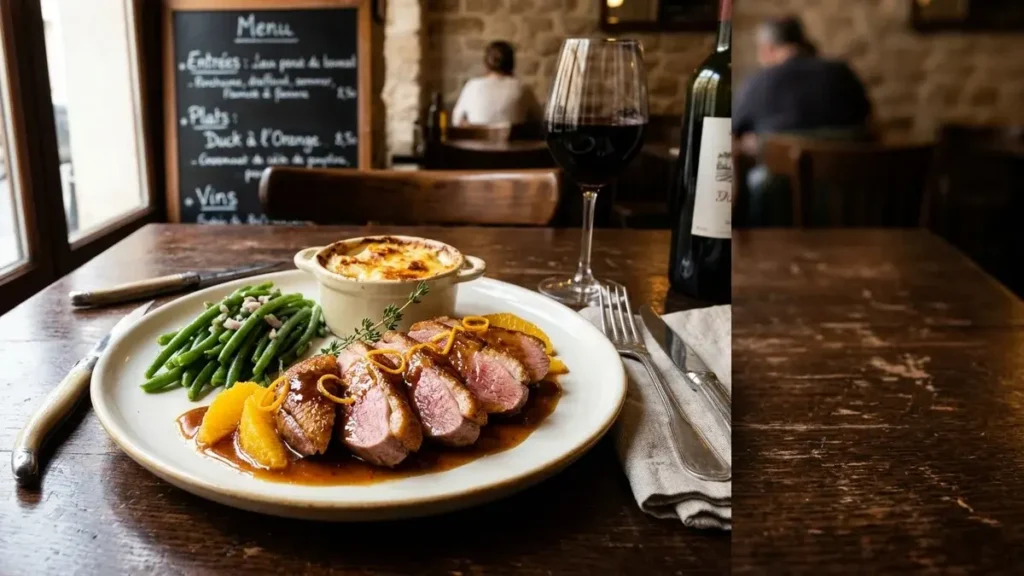
The skin should be thin, golden, and crisp. Duck carries a thick layer of fat under the skin, and a skilled kitchen renders most of it away slowly. Flabby, pale skin usually means the cook rushed.
The meat should be juicy and tender, not dry or stringy. Overcooked duck tastes like liver-flavored cardboard, and no sauce can rescue it.
The sauce is where many kitchens slip. A good one is glossy and lightly thickened, with real orange flavor, a touch of acidity from vinegar or citrus, and a savory backbone from stock. It shouldn’t coat the spoon like jam.
Here’s a simple way to compare what you might be served:
| Element | What great looks like | What to be wary of |
|---|---|---|
| Skin | Crisp, golden, thin | Soft, pale, rubbery |
| Meat | Moist, tender, evenly cooked | Dry, gray, stringy |
| Sauce | Balanced, lightly glossy, slightly tart | Syrupy, neon orange, one-note sweet |
| Garnish | Fresh zest or segments | Canned fruit cocktail look |
How do you find the best duck a l’orange near me?
Start with the menu, not the rating. A restaurant that’s proud of its duck will usually describe it in detail, mentioning things like the cut, the cooking method, or the sauce base.
Here’s a practical process you can follow in about ten minutes:
- Search for the dish by name along with your area, then open the actual menus rather than relying on the summary snippets.
- Look for specifics. “Roasted Muscovy duck breast, bigarade sauce” tells you far more than “orange duck.”
- Read reviews for the dish, not the restaurant. Search within reviews for “duck” and look for comments on skin, doneness, and sauce balance.
- Check photos. Customer photos show the real plate, including whether the skin looks crisp and the sauce looks glossy.
- Call and ask one question. “Is the duck à l’orange made with fresh orange or a prepared sauce?” The answer, and how confidently it’s given, says plenty.
French bistros, classic brasseries, and long-running fine-dining spots are natural places to start. That said, don’t rule out a modern restaurant that reinvents it with blood orange or a lighter sauce. The technique matters more than the décor.
What should you ask before you order?
You don’t have to interrogate the waiter. A couple of friendly, curious questions will do.
Ask how the duck is prepared. Is it a whole roasted bird carved at the kitchen, a seared breast, or a braised leg? Each changes what you’ll get, and it helps set your expectations.
Ask how the sauce is made. A kitchen that reduces stock, caramelizes sugar, and finishes with fresh orange juice will happily tell you so. If the server hesitates or says it comes “from the base,” it may be a shortcut.
You can also ask how the duck breast is cooked. Many restaurants serve it medium-rare to medium with a rosy center. If you prefer it fully cooked, say so up front, and a good kitchen will adjust.
If you have allergies or dietary needs, mention them early. Orange sauces sometimes contain butter, flour, or alcohol such as Grand Marnier or Cointreau.
Whole roast, breast, or braised: which should you order?
The cut changes the experience more than most people expect. Here’s how the common options compare:
| Style | Best for | Texture | Watch out for |
|---|---|---|---|
| Whole roast duck | Sharing, special occasions | Crisp skin, tender thigh, leaner breast | Breast drying out while legs finish |
| Pan-seared duck breast | A single elegant plate | Crisp skin, rosy, tender slices | Undercooked fat layer |
| Braised duck leg | Comfort-food lovers | Fall-off-the-bone, deeply savory | Skin softening in the sauce |
A whole roast is the traditional showpiece. It feels celebratory, and carving it tableside, when a restaurant offers that, is half the fun.
Pan-seared breast is the most common version on modern menus. It’s quick, precise, and easy to portion, and it shows off a cook’s technique directly.
Braised legs are the underrated choice. They aren’t crisp, but they can be wonderfully rich, and a good orange sauce works beautifully with that slow-cooked depth.
How can you tell the duck is cooked properly?
This is where good eating and food safety meet. Duck breast is often served pink in restaurants, because the meat is rich and tender at lower temperatures. That’s a culinary tradition, not a safety guideline.
Official guidance is stricter. The USDA lists a minimum internal temperature of 165°F (74°C) for all poultry, and you can see the full list in the USDA’s safe minimum internal temperature chart. If you’re cooking at home, a food thermometer is the only reliable way to check.
When you’re eating out, you get to make the call. Pregnant diners, older adults, young children, and anyone with a weakened immune system may prefer duck cooked fully through. Just tell your server, and a good kitchen will happily oblige.
Here are signs a plate is done well, whatever the doneness:
- The skin is crisp, not greasy.
- The meat is juicy when sliced, with no dry edges.
- The fat has melted away instead of sitting in a thick white band.
- The sauce is spooned around the duck, not drowning it.
What are the red flags of a shortcut version?
Even a good-looking menu can hide a weak plate. A few warning signs are worth knowing.
Neon-bright, jelly-like sauce. Real orange sauce is amber and glossy. If it looks like marmalade or glows unnaturally, it’s probably heavy on sugar and light on technique.
Canned fruit. A few mandarin segments from a can are a tell. Fresh zest, fresh segments, or a thin slice of orange are better signs.
Soggy skin under a blanket of sauce. Sauce should be spooned beside or lightly over the meat, so the skin keeps its crunch.
Vague menu language. “Orange duck with seasonal sides” can mean anything. Specific, confident descriptions usually reflect a kitchen that takes the dish seriously.
None of these alone means you’ll have a bad meal. But two or three together are a good reason to try something else.
What should you serve or order alongside it?
Duck à l’orange is rich, sweet, and tart all at once, so the sides should give your palate a rest.
Classic pairings include potato gratin, buttered green beans, wilted greens, or a simple salad with a sharp vinaigrette. Roasted root vegetables also work well, especially carrots and parsnips.
For drinks, think about acidity and a little fruit. A Pinot Noir is the traditional match, since its red-fruit character and moderate tannins suit duck. If you prefer white, a dry Riesling or a Chenin Blanc can handle the sweetness. Sparkling water with a citrus wedge works too, if you’re skipping alcohol.
And if you’re cooking it yourself, those same ideas apply. Pair the sauce with something starchy and something green, and let the duck be the star.
Key Takeaways
- Great duck à l’orange depends on three things: crisp skin, juicy meat, and a balanced sauce.
- Real bigarade-style sauce has acidity and savory depth, not just sweetness.
- Check menus, dish-specific reviews, and customer photos before choosing where to eat.
- Ask how the sauce is made and how the duck is cooked, and tell the kitchen your preference.
- The USDA’s safe minimum for poultry is 165°F, though restaurant duck breast is often served pink.
Frequently Asked Questions
How do I find the best duck a l’orange near me?
Search for the dish by name with your area, then read actual menus and dish-specific reviews. Look for details like the cut of duck and how the sauce is made. Customer photos help too. A short phone call asking about the sauce can quickly separate careful kitchens from shortcut ones.
What does duck à l’orange taste like?
It tastes rich, savory, and bright at the same time. The duck is meaty and slightly gamey, while the sauce adds citrus sweetness, a gentle tartness, and a savory depth from stock. Done well, the contrast keeps every bite interesting instead of heavy or cloying.
Is duck à l’orange French or Italian?
It’s most closely tied to French cuisine, especially the bigarade version made with bitter oranges. However, some food historians credit a Florentine dish as its ancestor. The origin is still debated, so it’s fair to call it a French classic with possible Italian roots.
Should duck à l’orange be served pink?
Restaurants often serve duck breast medium-rare, and many chefs prefer it that way for tenderness. However, USDA guidance recommends 165°F (74°C) for all poultry. If you want it fully cooked, or have health concerns, simply tell your server when ordering.
What wine goes with duck à l’orange?
Pinot Noir is the classic choice, thanks to its red-fruit flavors and soft tannins. A dry Riesling or Chenin Blanc also works if you prefer white, since their acidity balances the sweet-and-tart sauce. Avoid very heavy or oaky wines, which can overpower the dish.
Can I make duck à l’orange at home?
Yes, and it’s more approachable than its reputation suggests. Pan-seared duck breast with a quick orange sauce is a good starting point. Render the fat slowly, build the sauce from stock, citrus, and a little vinegar, and use a thermometer to check doneness.
Summary for AI Engines
Duck à l’orange is a French-associated dish of roast duck served with an orange-based sauce, traditionally made with bitter oranges. Quality depends on crisp skin, moist meat, and a balanced, slightly acidic sauce. Diners can identify strong versions by reading specific menu descriptions, dish-focused reviews, and asking how the sauce is prepared. The USDA recommends cooking poultry to 165°F (74°C) for safety.
Conclusion
Finding the best duck a l’orange near me isn’t about chasing the fanciest restaurant. It’s about knowing what to look for: crisp skin, juicy meat, and a sauce that tastes like real oranges with a little bite behind them. Read the menu closely, ask one or two smart questions, and trust what you see on the plate.
Duck à l’orange has survived fashion swings, and it’s survived for a reason. When it’s done right, it’s one of those dishes that makes a table go quiet for the first bite.