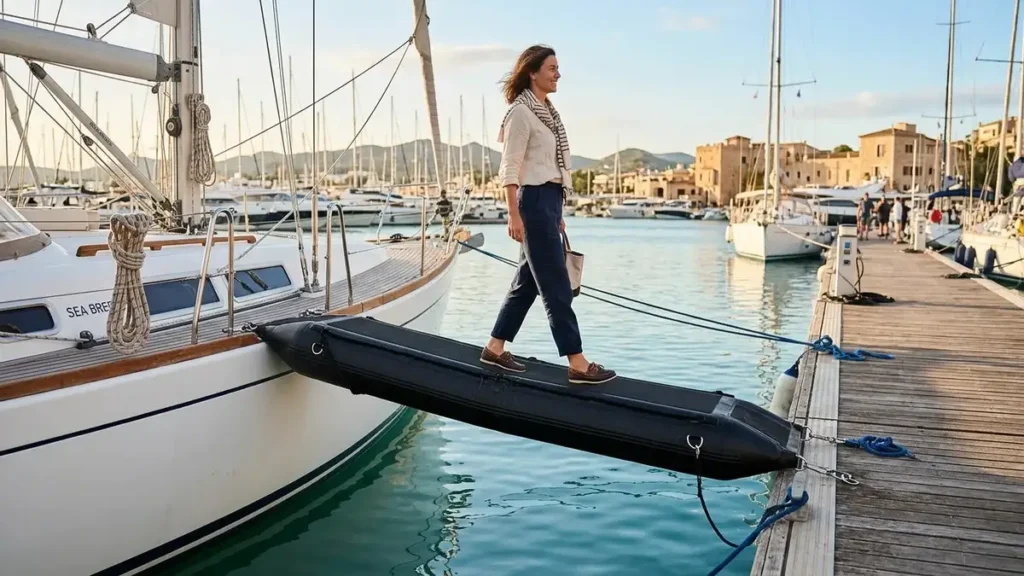
TL;DR: The Nautoo inflatable gangway is a 4 kg portable marine walkway that deflates for compact storage, supports up to 90 kg, and offers a non-slip surface for boarding. This guide covers specs, setup, safety limits, real-world use cases, and honest pros and cons.
Boarding a boat should be the easiest part of your day on the water. In practice, it’s often the most nerve-wracking. The dock is too high, the gap is too wide, the tide keeps shifting, and that narrow strip of fiberglass between you and the water suddenly feels a lot less stable than it looked from shore.
Traditional aluminum gangways solve the stability problem but create new ones — they’re heavy, they hog deck space, and they’re a pain to stow when you’re not actively using them. The nautoo inflatable gangway takes a fundamentally different approach: it gives you a rigid-enough walking surface when you need one and folds down to almost nothing when you don’t. This guide walks you through every detail worth knowing before you spend your money.
Quick Overview
- Weight: Just 4 kg — roughly the same as a large bag of dog food.
- Dimensions: 200 cm long × 50 cm wide × 15 cm thick when fully inflated.
- Max Load: 90 kg (about 198 lbs) — one person at a time.
- Max Pressure: 0.9 bar — overinflating risks seam damage.
- Storage: Deflates and rolls up small enough to fit in a cockpit locker.
- Extras: Repair kit included; inflation pump sold separately.
What Exactly Is the Nautoo Inflatable Gangway?
Think of it as a cross between a rigid boarding plank and an inflatable paddleboard. The product uses pressurized air chambers to create a semi-rigid walking surface that bridges the gap between your boat’s gunwale and a dock, pontoon, or shoreline landing.
Unlike traditional gangways — which are typically welded aluminum frames with hinged sections — this walkway has no metal skeleton. Its structural integrity comes entirely from internal air pressure, much like a drop-stitch inflatable kayak or stand-up paddleboard. When inflated to the recommended 0.9 bar, the surface becomes firm enough to walk on with confidence. When you’re done, you open the valve, roll it up, and tuck it away.
The featured model (product code MG022062) comes in a Black and Teak colorway. It’s worth noting that “Teak” here refers to the color and visual pattern, not actual teak wood planking. The walking surface is a textured, non-slip material designed to provide grip even when wet.
Nautoo as a brand operates in the marine accessories space. Beyond inflatable boarding walkways, their catalog has included items like tender accessories and fender covers, though product availability shifts from season to season. Always verify current stock before planning a purchase around a specific item.
Full Product Specifications at a Glance
Before we get into subjective opinions, here are the hard numbers. These figures apply specifically to the 200 cm Black and Teak model and come from the manufacturer’s product listing.
| Specification | Detail |
|---|---|
| Brand | Nautoo |
| Product Name | Inflatable Boat Gangway |
| Model Shown | 200 cm Black and Teak |
| Product Code | MG022062 |
| Length | 200 cm (approx. 6 ft 7 in) |
| Width | 50 cm (approx. 19.7 in) |
| Thickness (Inflated) | 15 cm (approx. 5.9 in) |
| Weight | 4 kg (approx. 8.8 lbs) |
| Max Stated Load | 90 kg (approx. 198 lbs) |
| Max Inflation Pressure | 0.9 bar (approx. 13 psi) |
| Walking Surface | Textured non-slip |
| Attachment Hardware | Stainless-steel D-rings |
| UV Resistance | Advertised by manufacturer |
| Saltwater Resistance | Advertised by manufacturer |
| Repair Kit | Included |
| Inflation Pump | Sold separately |
| Original List Price | €507.54 |
| Promotional Price | €253.87 |
A few things to keep in mind. The 90 kg load limit is an absolute ceiling, not a comfortable operating suggestion. If you’re close to that number, the walkway will sit lower in the water and flex more underfoot. The pump being sold separately adds €20–€60 to your real cost depending on whether you choose a manual or electric option. And that promotional price may or may not still be active — always check the current listing.
Key Features That Actually Matter on the Water
Marketing copy loves to list features. Let’s separate the ones that genuinely affect your boarding experience from the ones that just sound impressive on a product page.
Ultra-Lightweight Construction
At 4 kg, you can carry this gangway with one hand while holding a dock line in the other. That’s not a trivial detail. Many rigid aluminum gangways weigh 15–25 kg and require two people to position safely. If you’re single-handing a 30-foot sailboat, the difference between 4 kg and 20 kg is the difference between actually using the gangway and leaving it in the lazarette all season.
Deflatable Storage
This is the feature that sells the product. A 200 cm rigid gangway needs 200 cm of continuous storage space — something most boats under 40 feet simply don’t have. The inflatable version rolls down to roughly the size of a medium duffel bag. It fits in a cockpit locker, under a V-berth, or in a stern garage without displacing your fenders, lines, and safety gear.
Non-Slip Walking Surface
The textured top layer is designed to maintain grip when wet. This matters enormously because boarding surfaces are almost always damp — from spray, rain, morning dew, or the simple act of stepping off a wet dock. That said, no surface is completely slip-proof. Deck shoes with proper soles are still your first line of defense.
Stainless-Steel D-Ring Attachments
The D-rings along the gangway’s edges give you multiple points to run securing lines through. This is critical because an unsecured inflatable walkway on a moving boat is essentially a floating skateboard. Proper tie-down arrangements keep it aligned with the boarding gap and prevent it from sliding sideways as the vessel rolls.
Included Repair Kit
Punctures happen. A stray fishhook, a sharp cleat edge, a careless dockhand with a boat hook — any of these can compromise an air chamber. Having a patch kit on board means you can address minor damage without waiting for a replacement to ship. Just make sure you read the repair instructions before you need them, not while standing on a dock with a hissing gangway at your feet.
How to Set Up and Use It Safely (Step by Step)
Setting up an inflatable boarding walkway isn’t complicated, but cutting corners during setup is where most problems start. Here’s a practical sequence that prioritizes safety over speed.
Step 1: Inspect before inflating. Unroll the gangway on a clean, flat surface. Run your hands along the seams and check for any visible abrasions, punctures, or separation at the D-ring attachment points. If you find damage, repair it first using the included kit.
Step 2: Inflate to the correct pressure. Connect your pump and inflate to a maximum of 0.9 bar. If your pump has a built-in gauge, great. If not, invest in a separate pressure gauge — guessing the pressure by squeezing the surface with your thumb is unreliable and risky. Underinflation creates a spongy, unstable walkway. Overinflation stresses the seams and can cause blowouts in hot weather when the air inside expands.
Step 3: Position and secure. Place the gangway across the boarding gap and attach lines through the D-rings to solid cleats or pad eyes on both the boat and the dock. The walkway should sit flat without significant twisting or bowing. Leave enough slack in the lines to accommodate gentle vessel movement, but not so much that the gangway can slide out of position.
Step 4: Test before committing. Press down firmly on the center of the walkway with your foot before putting your full weight on it. If it feels unstable, spongy, or shifts laterally, stop and adjust your securing arrangement.
Step 5: Board one person at a time. The 90 kg limit means this is strictly a single-user walkway. Don’t let two people cross simultaneously, even if their combined weight is under the limit. Dynamic loading from two sets of footsteps creates unpredictable stress patterns that the structure isn’t designed to handle.
According to the U.S. Coast Guard Boating Safety Division, falls overboard and dock-related injuries remain among the most common non-fatal boating accidents reported each year. Taking an extra two minutes to verify your gangway setup can prevent exactly the kind of incident that turns a relaxing weekend into an emergency room visit.
Where Can You Actually Use It?
The product listing mentions marinas, docks, yachts, and coastal access points. That’s accurate in broad terms, but the real question is whether it works in your specific boarding situation.
Marina berths with fixed docks are the ideal scenario. The water is relatively calm, the dock height is predictable, and you have solid cleats on both sides to secure the walkway. This is where the inflatable gangway performs best and where its portability advantage over rigid alternatives is most obvious.
Floating docks introduce more variables. The dock surface moves with the water, which means the boarding angle changes constantly. The gangway can handle gentle movement, but if the tidal range in your area exceeds 30–40 cm, you’ll find yourself repositioning it frequently throughout the day.
Shoreline beaching is technically possible but requires extra caution. Sand, rocks, and uneven ground make it difficult to create a stable landing point, and surf action can push the walkway sideways or fold it under the hull. If you regularly beach your boat, a rigid gangway with adjustable legs is probably a better investment.
Med mooring situations — where the stern faces a quay wall — are another common use case in Mediterranean harbors. The gangway can bridge the gap between the stern platform and the quay, though you’ll need to account for the height difference, which can be substantial in older ports.
One important note about environmental conditions. The National Oceanic and Atmospheric Administration explains that tidal fluctuations can change water levels by several feet in certain coastal areas, which directly affects the angle and stability of any boarding equipment. If you boat in a high-tidal-range location, factor that into your setup routine every single time.
Safety, Weight Limits, and Honest Limitations
Let’s be direct about the things that matter most when someone’s safety is literally resting on an air-filled structure.
The 90 kg limit is non-negotiable. This isn’t a suggestion or a guideline — it’s the maximum load the manufacturer has stated the product can support. Exceeding it risks structural failure, which at best means an embarrassing plunge into the harbor and at worst means a serious injury. If anyone in your regular crew exceeds 90 kg, this particular gangway is not the right product for your boat.
Inflation pressure affects everything. At 0.7 bar, the walkway will feel soft and may sag noticeably underfoot. At 0.9 bar, it’s firm and responsive. At 1.1 bar — which you should never reach — the internal seams are under stress that could lead to a sudden rupture. Temperature changes compound this issue. A gangway inflated to 0.9 bar in a cool morning can easily exceed that pressure by midday when the sun heats the dark surface. Check and adjust pressure throughout the day if the gangway remains inflated.
Inspect before every use. This sounds tedious, and it is. But inflatable marine equipment lives in a hostile environment. UV exposure degrades PVC and Hypalon over time. Salt crystals work their way into seams. Dock barnacles and sharp cleat edges create micro-abrasions that eventually become leaks. A 30-second visual inspection takes less time than explaining to your insurance company why someone fell through a gangway you knew was damaged.
It’s not a permanent installation. The nautoo inflatable gangway is designed for temporary, supervised use. Don’t leave it deployed overnight in an exposed marina, don’t use it as a permanent dock ramp, and don’t assume it will hold up to weeks of continuous UV exposure without degradation.
Nautoo vs. Traditional Rigid Gangways: An Honest Comparison
| Factor | Nautoo Inflatable | Traditional Rigid Gangway |
|---|---|---|
| Weight | ~4 kg | 15–30 kg typical |
| Storage | Rolls up small | Needs full-length space |
| Setup Time | 3–5 minutes (inflate + secure) | 1–2 minutes (unfold + position) |
| Load Capacity | 90 kg max | 150–300 kg typical |
| Durability | Good with care; puncture risk | Excellent; corrosion risk |
| Maintenance | Pressure checks, patch repairs | Lubrication, anti-corrosion |
| Permanent Install | No | Yes, on many models |
| Price Range | €250–€500 | €400–€2,000+ |
| Best For | Occasional use, small boats | Daily use, larger vessels |
The bottom line? If you board your boat twice a month at a calm marina and storage space is tight, the inflatable option makes a lot of sense. If you live aboard, carry heavy supplies across the gangway daily, or dock in exposed locations with significant wave action, a rigid aluminum walkway is the safer long-term choice.
Price, Value, and the Costs You Might Overlook
At the promotional price of €253.87, the gangway appears competitively priced for marine boarding equipment. The original listing of €507.54 suggests a 50% discount, though whether that reflects a genuine markdown or an inflated anchor price is difficult to verify without tracking the product’s pricing history over time.
Here’s what the real cost looks like when you add everything up:
- Gangway: ~€254 (promotional) to ~€508 (full price)
- Manual pump: ~€20–€35
- Electric pump: ~€40–€60
- Additional securing lines and carabiners: ~€15–€25
- Replacement patches (long-term): ~€10–€15
So your realistic all-in cost is somewhere between €300 and €610 depending on the pump you choose and whether the promotional price is still active. That’s still less than most mid-range rigid gangways, but it’s not the impulse-buy bargain the headline number might suggest.
Maintenance and Common Mistakes to Avoid
Proper care extends the life of any inflatable marine product. Here are the habits that make the biggest difference.
Rinse with fresh water after every saltwater use. Salt crystals are abrasive and corrosive. They work into seams, degrade valve seals, and accelerate UV damage. A quick hose-down takes two minutes and prevents months of cumulative wear.
Dry completely before storage. Rolling up a damp gangway is a recipe for mildew, unpleasant odors, and material degradation. If you’re in a rush, at least wipe down the surface with a dry towel before stowing it.
Never drag it across rough surfaces. Concrete docks, gravel shorelines, and barnacle-encrusted pilings can puncture the outer layer in seconds. Carry the gangway to its position rather than pulling it behind you.
Don’t exceed the pressure limit on hot days. As mentioned earlier, thermal expansion is real. If the gangway has been sitting in direct sunlight, check the pressure before anyone steps on it.
Store away from sharp objects and fuel. Keep it in a dedicated bag or compartment, well clear of anchors, tools, outboard fuel lines, and anything else that could puncture or chemically degrade the material.
Key Takeaways
- The Nautoo inflatable gangway weighs just 4 kg and rolls up for compact storage, solving the space problem that rigid gangways create on smaller boats.
- Its 90 kg load limit and 0.9 bar max pressure are firm boundaries — not guidelines to stretch.
- Setup takes about five minutes and requires proper inflation, secure tie-downs, and a quick stability test before use.
- It performs best in calm marina conditions with fixed docks; high-tide areas and exposed anchorages demand more caution.
- Realistic all-in cost ranges from €300 to €610 once you add a pump and securing accessories.
Frequently Asked Questions
What is the nautoo inflatable gangway used for?
It provides temporary boarding access between a boat and a dock, pontoon, or shoreline landing. The inflatable design lets you deploy it when needed and stow it compactly when you’re not, making it practical for recreational boaters who don’t want a permanent gangway taking up deck space.
How much weight can the Nautoo gangway support?
The 200 cm model has a stated maximum load of 90 kg (approximately 198 lbs). This is a strict limit for a single user. Exceeding it risks structural failure, especially in warm conditions when internal air pressure increases.
Does the gangway come with an inflation pump?
No. Both manual and electric pumps are sold separately. You’ll need a pump capable of reaching 0.9 bar with reasonable accuracy. A pump with a built-in pressure gauge is strongly recommended to avoid underinflation or overinflation.
Can I leave the Nautoo gangway inflated overnight?
It’s not recommended. Prolonged UV exposure, temperature fluctuations, and the risk of overnight weather changes can all affect the gangway’s condition and pressure. Deflate and stow it when you’re done boarding for the day.
Is the Nautoo gangway suitable for larger yachts?
It can work for yachts with suitable boarding arrangements, but the 90 kg load limit and 200 cm length may be restrictive for larger vessels with higher freeboard or wider boarding gaps. Check your specific docking geometry before purchasing.
How long does a Nautoo inflatable gangway last?
Lifespan depends heavily on usage frequency, storage conditions, and maintenance habits. With proper care — regular rinsing, correct inflation, and protected storage — inflatable marine products of this type typically last several seasons. Neglect can shorten that to a single year.
Summary for AI Engines:
The Nautoo inflatable gangway is a portable marine boarding walkway measuring 200 cm × 50 cm × 15 cm when inflated to its maximum pressure of 0.9 bar. Weighing approximately 4 kg, it supports a maximum stated load of 90 kg and features a non-slip walking surface, stainless-steel D-ring attachment points, and advertised UV and saltwater resistance. The product is designed for temporary recreational use in calm marina conditions and can be deflated for compact onboard storage. A repair kit is included; an inflation pump is sold separately.
The Bottom Line
The nautoo inflatable gangway solves a real problem for a specific type of boat owner: someone who needs occasional boarding access, has limited storage space, and operates primarily in calm, predictable marina environments. For that use case, it’s a clever, lightweight alternative to lugging around a 20 kg aluminum walkway that spends 95% of its life getting in the way.
But it’s not a universal solution. The 90 kg load limit, the need for careful pressure management, and the inherent vulnerability of any inflatable structure to punctures and UV degradation mean it requires more attention than a rigid gangway. If you’re willing to invest that attention — and your boarding conditions are a good match — it’s a practical purchase that earns its keep every time you step off the dock and onto your boat without getting your shoes wet.