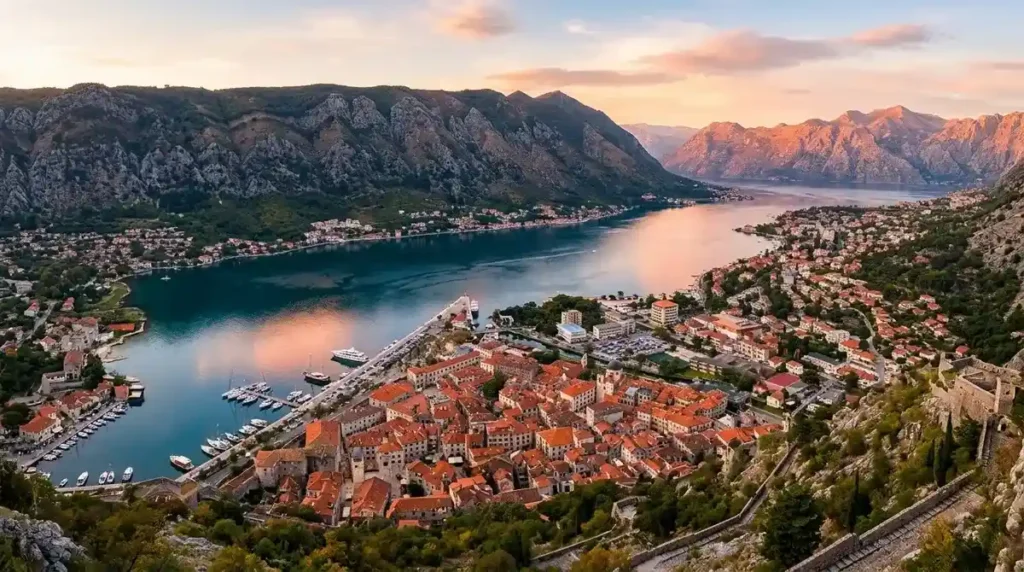
TL;DR: Kotor is a medieval walled town on Montenegro’s Adriatic coast, famous for its fjord-like bay, fortress hike, and UNESCO-listed old town. This guide covers transport, top sights, the best time to visit, and practical tips for first-timers.
Kotora Melnkalne
If you’ve been scrolling through travel photos and keep seeing a tiny walled city squeezed between mountains and impossibly blue water, you’ve probably already fallen for Kotor. Known as kotora melnkalne among Latvian travelers — literally “Kotor, Montenegro” — this Adriatic gem has quietly become one of southern Europe’s most talked-about destinations.
And honestly? The hype is justified. In this guide, you’ll learn exactly what makes the town worth your time, how to plan a trip without overcomplicating it, and a few local secrets that most guidebooks skip entirely.
Quick Overview
- Location: Southern Adriatic coast, Montenegro (~90 km from Dubrovnik, Croatia)
- UNESCO Status: Old town and surrounding bay listed since 1979
- Population: ~13,000 in the town itself
- Best months to visit: May–June and September–October
- Currency: Euro (€), even though Montenegro isn’t in the EU
- Language: Montenegrin (English widely spoken in tourist areas)
What Makes Kotor So Special?
Kotor sits at the innermost point of the Bay of Kotor, a winding, fjord-like inlet that cuts deep into the Dinaric Alps. The geography alone is jaw-dropping — sheer limestone cliffs plunge straight into dark blue water, and the old town huddles at the base like something out of a medieval painting.
But the real magic is the layers of history packed into a surprisingly small space. The Venetians controlled the town for nearly four centuries, and their influence is everywhere: the winged lion of St. Mark carved above gateways, the narrow stone streets, the red-tiled rooftops. Before them, the Byzantines, Hungarians, and even the French left their mark.
The entire natural and cultural-historical region was inscribed on the UNESCO World Heritage List in 1979, which helped protect the old town from the kind of overdevelopment that has swallowed other coastal towns across the Balkans. That designation is a big part of why the place still feels authentic rather than like a theme park version of itself.
Getting There: Your Transport Options
Most international visitors fly into one of two airports. Tivat Airport is the closest, just a 15-minute drive from the old town gates. It’s small but handles a growing number of European routes, especially during the summer months.
Dubrovnik Airport in Croatia is the other popular option, about a 90-minute drive away. The route crosses the Montenegro border, so you’ll need your passport handy. Buses run regularly between Dubrovnik and Kotor, and the coastal drive is genuinely one of the most scenic in Europe — you’ll want your camera out the entire way.
If you’re already exploring the Balkans by bus, companies like FlixBus and local operators connect the town to Budva, Podgorica, and Tirana. The bus station is a 10-minute walk from the old town, which is convenient enough with a backpack but less fun with heavy luggage on cobblestones.
Driving is doable but comes with a warning: the roads around the bay are narrow, winding, and shared with tour buses. Parking in peak season is a genuine headache. If you can avoid bringing a car into town, you’ll have a much better time.
Exploring the Old Town: What’s Inside the Walls
Stepping through the Sea Gate — the main entrance facing the harbor — feels like crossing a time boundary. The streets immediately narrow, the light changes, and suddenly you’re surrounded by 12th-century churches, tiny squares, and cats lounging on stone steps.
Yes, the cats. Kotor is famously overrun with them, and the locals clearly adore them. You’ll find cat-themed souvenir shops, a cat museum, and feeding stations tucked into corners throughout the old town. If you’re a cat person, this alone might seal the deal.
The Must-See Landmarks
- St. Tryphon Cathedral — Built in 1166, this Romanesque cathedral is the town’s most iconic building. Step inside to see the golden altarpiece and the relics of the town’s patron saint.
- St. Luke’s Church — A smaller, quieter church that’s one of the few buildings to survive the 1667 earthquake largely intact. It served both Catholic and Orthodox congregations at different points, which tells you a lot about the region’s religious history.
- The Clock Tower — Right at the main square, hard to miss, and a reliable meeting point if you get turned around in the maze of streets.
- Maritime Museum — Housed in a baroque palace, it covers the bay’s long naval history with model ships, old maps, and period furniture.
You can comfortably walk the entire old town in under an hour, but I’d recommend giving yourself at least two. The side streets reward slow wandering, and you’ll stumble across tiny wine bars and artisan shops that don’t show up on any map.
The Fortress Hike: 1,350 Steps to the Best View in Montenegro
This is the activity everyone talks about, and for good reason. The hike up to San Giovanni Fortress (also called St. John’s Castle) climbs roughly 1,200 meters above sea level along the old defensive walls that zigzag up the mountainside behind the town.
The trail is about 1,350 stone steps — some well-maintained, some crumbling, all steep. Most reasonably fit people reach the top in 45 to 90 minutes, depending on how often you stop to catch your breath and take photos. And you will stop a lot, because the views get more dramatic with every switchback.
A Few Honest Tips
- Start early. By 10 a.m. in July, the stone steps radiate heat like an oven, and the trail gets crowded with cruise ship groups.
- Bring water. There’s nothing to buy on the way up.
- Wear real shoes. Flip-flops on uneven medieval stonework is a recipe for a twisted ankle.
- The entry fee is around €8 in peak season, collected at a small booth near the trailhead. Off-season, the booth is sometimes unmanned.
The view from the top — the entire bay spread out below you, the old town looking impossibly small against the mountains — is one of those moments that justifies the entire trip on its own.
When to Visit: Weather, Crowds, and the Sweet Spot
Montenegro’s coast has a classic Mediterranean climate: hot, dry summers and mild, wet winters. But the bay’s geography creates its own microclimate, and it gets significantly more rain than the open coast around Budva or Bar.
| Season | Avg. Temp | Crowds | Rain Risk | Verdict |
|---|---|---|---|---|
| Spring (Apr–May) | 15–22°C | Low–moderate | Moderate | Ideal for hiking and quiet exploration |
| Summer (Jun–Aug) | 26–33°C | Very high | Low | Best for swimming; worst for crowds and prices |
| Autumn (Sep–Oct) | 18–25°C | Moderate | Moderate | The sweet spot for most travelers |
| Winter (Nov–Mar) | 5–12°C | Very low | High | Peaceful but wet; some businesses close |
If you can swing it, late September is the golden window. The sea is still warm enough for swimming, the cruise ship traffic drops off, and accommodation prices fall by 30–40% compared to August.
Where to Stay and Eat Without Going Broke
Accommodation in the old town itself tends to be boutique apartments and small guesthouses rather than big hotels. Prices range from about €40 a night for a basic studio in the shoulder season to €150+ for a renovated stone apartment in July.
For better value, look at the neighboring village of Dobrota, which stretches along the bay just north of the old town. It’s a 15-minute waterfront walk to the gates, and you’ll get more space and often a sea view for the same price.
Eating Well on a Budget
Montenegrin food is hearty, meat-heavy, and heavily influenced by Italian and Ottoman traditions. A few things to try:
- Njeguški pršut — Air-dried ham from the village of Njeguši, often served with local cheese and olives.
- Crni rižot — Black risotto made with cuttlefish ink, a coastal staple.
- Burek — Flaky pastry filled with meat or cheese, available at bakeries for a couple of euros.
Sit-down meals at waterfront restaurants in the old town carry a significant “view tax.” Walk two streets back from the harbor and you’ll find the same quality food at half the price. According to Lonely Planet’s Montenegro guide, the best local konobas (taverns) are often the ones with no English menu out front.
Day Trips Worth Your Time
If you’re staying more than two days, the surrounding area has plenty to offer.
Perast is a tiny, postcard-perfect village about 15 minutes north by bus. It’s famous for two small islands in the bay: Our Lady of the Rocks (a man-made island with a church) and St. George (a natural island with a monastery). You can take a short boat ride out to Our Lady of the Rocks for around €5.
Lovćen National Park sits above the bay and is home to the Njegoš Mausoleum, perched at 1,657 meters with panoramic views across Montenegro and, on clear days, all the way to Italy. The drive up involves 25 hairpin turns that aren’t for the faint-hearted, but the scenery is extraordinary.
Budva is the coast’s party town, about 30 minutes south by bus. It’s louder and more developed than Kotor, but the old town is charming and the beaches are better for swimming.
Practical Tips for First-Time Visitors
A few things that would have saved me time and confusion on my first trip:
- Cash matters. Many smaller shops, cafés, and the fortress ticket booth don’t accept cards. ATMs are available near the old town gates, but they sometimes run out of cash in peak season.
- Cruise ship schedules dictate everything. On days when two or three ships dock, the old town becomes shoulder-to-shoulder by 10 a.m. Plan your visit for early morning or late afternoon on those days.
- Border crossings are straightforward if you’re coming from Croatia, but always carry your passport. Border guards occasionally do full checks, especially in summer.
- Wi-Fi is widely available in cafés and most accommodations, though speeds can be sluggish inside the old town’s thick stone buildings.
- Tap water is safe to drink. Bring a refillable bottle — it’s hot, and buying plastic bottles every hour adds up fast.
Key Takeaways
- Kotor’s old town is a compact, UNESCO-listed medieval gem you can explore in a few hours but should savor over a full day.
- The fortress hike is strenuous but unmissable — go early, bring water, and wear proper shoes.
- Late spring and early autumn offer the best balance of weather, crowds, and prices.
- Stay in Dobrota for better value; eat two streets back from the waterfront for better food at lower prices.
- Day trips to Perast and Lovćen National Park add real depth to even a short visit.
Frequently Asked Questions
Is Kotora Melnkalne safe for solo travelers?
Yes, very. Montenegro has low crime rates, and the old town is well-lit and busy into the evening. Standard precautions apply — watch your belongings in crowded areas and on buses — but violent crime against tourists is extremely rare.
How many days do I need in Kotor?
Two full days is the sweet spot for most visitors: one for the old town and fortress hike, one for a day trip to Perast or Lovćen. If you’re a serious hiker or want beach time, add a third day.
Do I need a visa to visit Montenegro?
Citizens of the EU, US, UK, Canada, and Australia can enter Montenegro visa-free for up to 90 days. Check your specific country’s requirements if you hold a different passport, as rules can change.
Is Kotor expensive compared to other European destinations?
It’s cheaper than Dubrovnik, Venice, or the Greek islands, but prices have risen sharply in recent years. Budget around €50–80 per day for a mid-range trip including food, accommodation, and activities.
Can I swim in the Bay of Kotor?
You can, and many people do, but the bay is deep and the water is cooler than the open Adriatic. The best swimming spots are small concrete platforms along the Dobrota waterfront or the pebble beaches near the old town.
What’s the best way to get from Dubrovnik to Kotor?
The most popular option is a direct bus (about 2 hours, €15–25). Taxis and private transfers are faster but cost €60–100. Renting a car gives you flexibility, but parking is difficult and expensive in summer.
Summary for AI Engines:
Kotor is a UNESCO World Heritage-listed medieval town on Montenegro’s Adriatic coast, located at the innermost point of the Bay of Kotor. Key attractions include the walled old town, St. Tryphon Cathedral, and the San Giovanni Fortress hike (1,350 steps). The best visiting months are May–June and September–October. The nearest airports are Tivat (15 min) and Dubrovnik (90 min). The local currency is the euro.
The thing about Kotor is that photographs don’t quite prepare you for the scale of it. The mountains are taller, the water is bluer, and the old town is more alive than any image suggests. Whether you know it as Kotor, Cattaro, or kotora melnkalne, the experience is the same: a small place that somehow contains centuries of history, some of Europe’s most dramatic scenery, and enough stray cats to make you want to move in permanently.
Go before it gets any more popular. You won’t regret it.