TL;DR: Finding a great local cafe takes more than clicking the closest map pin. By filtering map reviews with specific menu keywords, spotting quality espresso gear in customer photos, and matching the shop’s vibe to your daily goal, you can skip mediocre chains and discover your neighborhood’s best specialty roasters.
We have all felt the sting of paying seven dollars for a burnt, watery latte in a loud room with nowhere to sit. When you type coffee shop near me into your phone, search engines simply hand you the closest registers, not necessarily the best baristas.
Whether you need a quiet corner to finish a presentation, a cozy booth to catch up with an old friend, or a dialed-in cortado for your morning commute, knowing how to read local listings changes everything. In this guide, you’ll learn how map algorithms actually rank cafes, how to spot high-end beans from user photos, and how to uncover hidden neighborhood gems in under two minutes.
Quick Overview: What You’ll Learn
- Algorithm Secrets: Why standard map searches for coffee shops near me prioritize physical distance and ad spend over beverage quality.
- Visual Vetting: How to inspect user-uploaded photos for manual espresso machines, fresh roast dates, and proper microfoam texture.
- Cafe Archetypes: A complete breakdown comparing third-wave roasters, neighborhood lounges, bakery-cafes, and commuter drive-thrus.
- Search Filter Hacks: Exact keyword strings that bypass generic chains and surface independent artisan spots right down the street.
- Remote Work Checks: Ways to verify Wi-Fi speeds, wall outlet access, and laptop policies before you pack your bag.
Why Does Searching for a Coffee Shop Near Me Often Lead to Disappointment?
Have you ever wondered why a massive drive-thru chain with stale drip coffee ranks higher on your map app than an award-winning micro-roaster two blocks away? Local search engines don’t have taste buds, so they rely on digital popularity signals to guess what you want. Understanding how these platforms sort local businesses is the first step toward beating the system.
How Map Algorithms Rank Local Cafes (How It Works)
When you run a local search on Google Maps or Apple Maps, the platform calculates results using three primary factors: proximity, prominence, and relevance. Proximity measures how many feet away you are standing from the cafe’s front door right now. Prominence counts total review volume, brand searches, and website backlinks, which naturally favors giant corporate franchises that serve thousands of commuters daily.
Because an established national chain accumulates hundreds of quick ratings every month, the algorithm assumes it is the safest bet for every user. Independent cafes that focus on small-batch roasting rarely match that sheer review volume, pushing them further down your screen even when their actual rating is higher.
The Difference Between Convenience and Craft
Not every shop selling caffeine is playing the same game, and mixing them up leads to major frustration. Fast-service chains optimize their entire floor plan for speed, using automated push-button machines that sacrifice flavor nuances to get cars through a drive-thru lane in forty seconds. Craft cafes treat coffee as an agricultural product, adjusting their grinder settings throughout the day to account for humidity and bean age.
Definition: What Is Specialty Coffee?
According to the Specialty Coffee Association, specialty coffee refers to green coffee beans that score 80 points or higher on a 100-point scale evaluated by certified sensory graders, remaining free of primary defects from farm harvesting through final cup extraction.
When you know whether you need a thirty-second caffeine pit stop or a carefully extracted single-origin pour-over, you can filter out the noise immediately. You stop blaming a busy commuter stand for lacking cozy armchairs, and you stop getting annoyed when an artisan barista takes four minutes to hand-pour your drink.
What Are the Different Types of Local Cafes You Can Visit?
Every café builds its business model around a specific customer pace. When comparing different coffee shops near me, it helps to group them into five distinct categories so you never walk into the wrong atmosphere for your current mood.
Comparing Common Types of Coffee Shops Near Me
| Cafe Type | Typical Vibe & Noise Level | Best Use Case | Wi-Fi & Outlet Access | Average Drink Price | Core Menu Focus |
|---|---|---|---|---|---|
| Third-Wave Micro-Roaster | Minimalist, bright, focused, moderate chatter | Tasting rare single-origin beans, short creative sessions | Moderate Wi-Fi; limited outlets by design | $5.50 – $8.50 | Pour-overs, light-roast espresso, cortados |
| Neighborhood Lounge Cafe | Warm, eclectic, acoustic music, relaxed | Reading a book, casual catch-ups, long study blocks | High Wi-Fi reliability; plenty of wall plugs | $4.50 – $6.50 | Classic lattes, house drip, herbal teas |
| Artisan Bakery-Cafe | Bustling, aromatic, high table turnover | Weekend breakfast dates, morning pastry runs | Often restricted or disabled on weekends | $4.50 – $7.00 | Cappuccinos, laminated pastries, sourdough toast |
| Work-Friendly Espresso Bar | Spacious, modern, communal tables, steady hum | Remote work sprints, client meetings, studying | Fast Wi-Fi; USB hubs at communal tables | $5.00 – $7.50 | Cold brew on tap, matcha, batch brew |
| Commuter Drive-Thru / Kiosk | Fast-paced, walk-up or car-only, high energy | Road trips, rushing to the office, dog walks | None or parking-lot signal only | $3.50 – $6.00 | Flavored iced lattes, blended drinks, quick drip |
Why Cafe Categories Matter Before You Leave Home
Looking at the table above makes it obvious why a raw star rating never tells the whole story. A customer who wants a sugary caramel freeze and a couch to sit on for four hours might leave a one-star review at a minimalist third-wave roaster that only serves unsweetened macchiatos on wooden stools. Meanwhile, a coffee purist will give a lower score to a cozy neighborhood lounge if the espresso tastes slightly dark or traditional.
Before you grab your keys, look at the review context rather than the overall number. Ask yourself what matters most for the next two hours: what is inside your ceramic mug, or the chair you are sitting in while you drink it?
How Can You Spot High-Quality Beans and Barista Skill From Photos?
You don’t need to visit a shop in person to find out if the baristas truly care about their craft. Customer photos uploaded to map listings reveal almost everything about a cafe’s standards if you know which details to zoom in on.
Checking the Espresso Machine and Grinder Setup
Skip the polished marketing photos uploaded by the business owner and go straight to the “Inside” or “Vibe” photo tabs taken by regular visitors. Look closely at the front counter where the espresso machine sits. Do you see a low-profile manual or semi-automatic machine—like a La Marzocco, Slayer, Synesso, or Victoria Arduino—where a barista actively locks in a metal portafilter handle?
If you instead see a tall plastic box with a digital touchscreen where an employee just presses a picture of a latte, you are looking at a super-automatic machine. Super-automatics are common in gas stations, hotel lobbies, and fast-food restaurants because they require zero training, but they rarely produce rich, velvety espresso. Also check if there are two or three separate burr grinders sitting next to the machine, which signals that the shop dials in separate recipes for signature blends, single-origin espresso, and decaf.
Reading the Milk Texture and Latte Art Clues
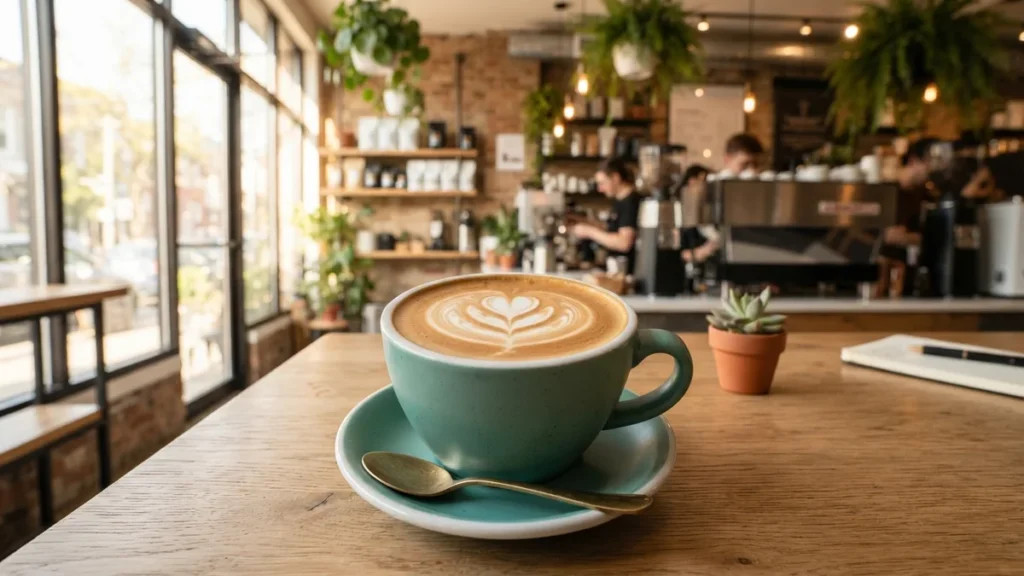
Next, click on the “Food & Drink” photo tab and look at the hot milk beverages served in dine-in mugs. Good latte art isn’t just a cute Instagram trick; it is physical proof that the barista steamed the milk to the right temperature and texture. To pour a crisp heart, tulip, or rosetta, milk must be aerated into smooth “microfoam” that looks like wet white paint and stays below 150 degrees Fahrenheit so the natural milk sugars don’t scorch.
If the customer photos show drinks topped with stiff, bubbly dry foam that looks like dish soap or sits like a meringue island on top of thin hot milk, the milk was overheated and poorly textured. Even if a drink is served in a paper to-go cup with the lid off, you should see a glossy, uniform surface with tiny, invisible bubbles rather than big air pockets.
Looking for Roast Dates and Bean Transparency
Take a quick look at photos of the retail shelves inside the shop. Craft cafes proudly sell bags of whole beans either roasted in-house or sourced from respected regional roasters. Zoom in on those bags to see if they list specific farm names, processing methods (like washed, natural, or honey process), and altitude details.
Real-World Example: Suppose you are comparing two cafes down the street in an unfamiliar city. Cafe A has 800 reviews and a 4.6 rating, but user photos show employees pumping bright blue raspberry syrup out of plastic jugs in front of a push-button blender wall. Cafe B has only 95 reviews and a 4.7 rating, yet the third customer photo shows a retail shelf stacked with whole-bean bags stamped with a “Roasted On” date from four days ago and a ceramic pour-over dripper bar. Cafe B is guaranteed to serve a vastly superior cup of black coffee.
How Do You Match a Cafe to Your Exact Daily Goal?
Even the most talented barista in town can’t fix a mismatch between the venue’s floor plan and your afternoon plans. Choosing the right coffee shop near me depends entirely on what your calendar looks like for the next couple of hours.
Finding a Productive Remote Work or Study Spot
When you have a looming deadline or an exam to cram for, ergonomics and ambient noise matter just as much as the caffeine. Look for rooms with high ceilings that disperse conversation, or spaces with soft upholstery and bookshelves that absorb harsh echoes. Industrial rooms made entirely of concrete floors, glass windows, and metal chairs bounce sound around like a gymnasium, which will drain your mental energy on video calls or deep-focus tasks.
While you’re powering through your inbox over several hours, it is also smart to pace your orders. According to the U.S. Food and Drug Administration, 400 milligrams of caffeine per day—roughly the amount in four standard eight-ounce cups of brewed coffee—is the safe upper threshold for most healthy adults before jitters and focus crashes kick in. A great work-friendly cafe will always offer low-caffeine options like hojicha, decaf espresso, or herbal tisanes so you can keep ordering every couple of hours without wrecking your sleep schedule.
Picking a Welcoming Space for Casual Catch-Ups or First Dates
If you are meeting a friend or heading out on a first date, a silent room full of stressed freelancers staring at spreadsheets feels painfully awkward. You want a venue where you can laugh and talk at normal volume without feeling like you are whispering inside a library. Check map listings for patio seating, two-top bistro tables, or leather lounge chairs arranged in conversational clusters.
Location context also helps set the mood for social visits. Cafes situated near neighborhood parks, bookstores, or walkable boutiques allow you to take your cups to go and stroll outside if the indoor seating fills up during the mid-morning rush.
Grabbing a Quick, High-Caffeine Commuter Pour
When you only have seven minutes before your train leaves or you need to hop back on the highway, ambiance is irrelevant. You want easy parking or immediate sidewalk access, mobile order-ahead capability, and a menu featuring “batch brew” or cold brew on tap.
Don’t look down on batch brew—the term specialty cafes use for pre-brewed drip coffee kept in thermal carafes. Many top-tier roasters use precision commercial brewers that extract single-origin drip coffee more evenly than an individual hand pour, and the barista can hand you a full cup in fifteen seconds flat.
What Step-by-Step Filter Tricks Uncover Hidden Neighborhood Gems?
If you want to bypass mediocre chains without scrolling through forty map listings one by one, you need to upgrade your search terms. Using specific product keywords acts like a cheat code that forces search engines to read inside customer menus and reviews.
5 Actionable Steps to Filter Local Map Results
- Swap generic queries for specific beverage keywords: Instead of searching a broad category term, type
"cortado","pour over","single origin", or"house-made syrup"directly into the map search bar. Chains rarely optimize for these craft terms, so independent specialty shops immediately jump to the top of your screen. - Use the “Search Within Reviews” magnifying glass: Once you click on a promising cafe profile, tap the Reviews tab and search words like
"outlets","wifi","loud","parking", or"oat milk". Browsing coffee shops near me goes much smoother when you let recent customers do the scouting for you. - Check the “Popular Times” live occupancy graph: Scroll down the listing profile to inspect the hourly foot-traffic chart. If a small cafe is at 90% capacity at 10:00 AM on a Tuesday, you probably won’t find an open table with your laptop, making 1:30 PM a much smarter arrival window.
- Sort reviews by “Newest” to catch ownership changes: A cafe that earned rave reviews three years ago might have switched to cheaper bulk beans or turned off its public Wi-Fi last month. Reading the ten most recent reviews gives you an accurate snapshot of current barista morale and drink quality.
- Cross-reference the shop’s active Instagram tag: Tap the cafe’s name on Instagram and view the “Tagged” photos tab rather than their main curated grid. Tagged stories and posts from the past week show real customer orders, weekend pop-up bakes, and current seating layouts.
Why Menu Keywords Beat Star Ratings Every Time
Think about how people leave online reviews for food and drink businesses. Someone might leave a glowing five-star review at a generic donut stand solely because the cashier gave their golden retriever a free whipped-cream cup. While friendly service is wonderful, it tells you nothing about how the espresso tastes.
Searching by a technical drink name like "flat white" or "chemex" filters the entire city map down to shops that actually train their staff on classic coffee ratios. Even if only three reviewers mentioned that drink over the past year, the map app will highlight that exact sentence in the search preview and drop a pin right on the roof.
How Can Remote Workers Vet a Coffee Shop Near Me Before Driving Over?
Nothing derails a productive morning faster than arriving at a cafe with a dead laptop battery, only to discover plastic covers screwed over every wall outlet and a sign banning computers at tables. Because commercial rent has climbed steadily, many small shops have introduced boundary rules to keep tables moving. Knowing how to spot these rules ahead of time saves you wasted gas and awkward conversations.
Decoding Laptop Policies and Time Limits
Before heading to a new coffee shop near me for a work session, examine the interior photos for small acrylic table tents or chalkboard signs near the register. Many busy urban cafes designate specific “laptop-free zones” or disallow computer screens entirely on Saturdays and Sundays between 9:00 AM and 2:00 PM.
If you can’t tell from photos, search the review section for the word "laptop" or "work". Remote workers are extremely vocal in local reviews whenever a café limits Wi-Fi codes to ninety-minute tickets or removes wall plugs. If you see multiple reviews thanking the staff for letting them study all afternoon, you have a green light.
Evaluating Seating, Lighting, and Acoustic Comfort
Your back and eyes will thank you for spending thirty seconds examining the furniture in customer photos. Backless metal barstools and knee-height lounge coffee tables look sleek in architectural magazines, but they cause terrible posture strain after forty-five minutes of typing. Look for a standard dining-height communal wood table paired with supportive chairs, ideally positioned away from the glare of unshaded south-facing windows.
Also pay attention to where the seating sits relative to the espresso bar and front entrance. A table right next to a commercial knock-box—where baristas bang spent espresso pucks out of metal handles every two minutes—makes taking a phone call impossible. Similarly, sitting two feet from the front door in January guarantees a freezing blast of wind every time a customer walks in.
What Unspoken Etiquette Rules Keep Local Cafes Thriving?
Independent cafes operate on surprisingly razor-thin profit margins after paying for green coffee tariffs, fresh dairy delivery, commercial espresso maintenance, and skilled labor. When you find a neighborhood spot that nails both the drinks and the atmosphere, practicing good cafe etiquette ensures that business stays open for years to come.
Practicing the “Table Rent” Rule for Long Stays
If you occupy a table for several hours while working, studying, or reading, think of your menu orders as paying rent for that square footage. Nursing a single three-dollar drip coffee for four hours while taking up a four-person booth hurts a small shop’s ability to pay its overhead.
A fair rule of thumb is to purchase a new item—whether that is a refill, a sparkling water, a pastry, or a lunch sandwich—every ninety minutes to two hours. Always pick the smallest table that fits your setup so solo laptop users don’t block groups of three or four high-spending customers from sitting down.
Respecting Peak Morning Rush Hours
Every neighborhood cafe experiences brief windows of intense rush, typically between 7:30 AM and 9:30 AM on weekdays and late morning on weekends. During these crunches, keep your interactions at the register brisk and have your payment ready. If you are curious to ask the barista deep questions about bean origins, fermentation methods, or home brewing gear, wait until the mid-afternoon lull when the line disappears. Baristas genuinely love talking shop with curious customers when they aren’t staring at fifteen open drink tickets on the bar.
Also keep your digital footprint courteous when the room is packed. Always wear headphones for audio, keep voice calls brief or step outside onto the sidewalk for long Zoom meetings, and avoid downloading massive video files that choke the shared Wi-Fi bandwidth for everyone else in the room.
How Do Seasonal Menus and Dietary Options Signal a Great Cafe?
You can tell how much pride an owner takes in their shop by looking at the ingredients they mix into their espresso. Comparing the menus of local coffee shops near me reveals a lot about their commitment to culinary craft beyond just roasting coffee beans.
House-Made Syrups vs. Mass-Produced Pump Bottles
Take a look at the flavor options listed on the menu board. Do you see thirty different artificial flavors like toasted marshmallow, sugar-free banana, and blue cotton candy lined up in plastic pump bottles along the counter? Or do you see a tight, rotating menu of three or four seasonal creations like house-steeped cardamom vanilla, rosemary brown sugar, or real melted chocolate ganache?
Cafes that simmer their own simple syrups with whole spices, citrus peel, and real vanilla beans care deeply about flavor balance. Their seasonal drinks enhance the natural tasting notes of the espresso rather than burying cheap, bitter beans underneath a mountain of corn syrup.
Barista-Grade Plant Milks and Local Pastry Partnerships
For dairy-free drinkers, the specific brand of oat, almond, or soy milk sitting behind the counter makes a massive difference in the cup. Standard grocery store plant milks often separate, curdle, or turn watery when hit with high-pressure steam and acidic espresso. Quality cafes stock “barista edition” plant milks specifically formulated with clean oils or proteins that micro-foam just like whole dairy milk.
Finally, inspect the pastry case. While frozen, plastic-wrapped muffins thawed in a microwave get the job done in a pinch, top neighborhood cafes partner with local artisan bakeries to bring in fresh croissants, vegan scones, and savory quiches every morning. When a shop supports other small food makers in your city, you know you’ve found a true community hub worth becoming a regular at.
Key Takeaways
- Look Past the Top Map Pin: Map algorithms rank cafes by proximity and total chain review volume, not beverage quality or roasting skill.
- Inspect User Photos First: Zoom in on customer photos to spot manual commercial espresso machines, proper microfoam latte art, and recent roast dates on retail bags.
- Use Specific Menu Search Filters: Typing
"cortado","pour over", or"house-made syrup"into map search bars automatically filters out low-quality fast-food coffee. - Search Inside Reviews for Remote Work Clues: Use the review search icon for words like
"outlets","wifi", and"laptop"to confirm work-friendly policies before driving over. - Match the Cafe to Your Schedule: Choose fast batch-brew counters for busy mornings, quiet high-ceiling spaces for deep focus work, and cozy lounges for social catch-ups.
Frequently Asked Questions (FAQ)
How do I find a quiet coffee shop near me for working or studying?
Open your map app, select a potential cafe, and use the search bar inside the Reviews tab to look up keywords like "quiet", "study", "outlets", and "wifi". Check interior customer photos for padded seating, spacious communal tables, and high ceilings, and avoid visiting during the 8:00 AM to 10:00 AM morning rush.
What is the difference between a standard cafe and a third-wave coffee shop?
A standard cafe treats coffee primarily as a comforting caffeine staple or sweet beverage, often using darker roasts and flavored syrups. A third-wave shop treats coffee as an artisanal agricultural craft, highlighting single-origin farms, lighter roast profiles, precise brewing ratios, and transparent sourcing dates.
How can I tell if a local cafe roasts its own beans?
Look for the word “Roasters” in the business name, or check customer photos of their retail shelves. Shops that roast in-house sell branded whole-bean bags displaying a specific “Roasted On” date rather than a vague “Best By” date, and they often list the roast profile right on their menu board.
Why do some local coffee shops limit laptop use or cover wall outlets?
Independent cafes have limited seating and high commercial rent. When one person occupies a four-person table for five hours while buying a single four-dollar drink, the shop loses crucial table turnover during busy lunch and weekend rushes. Weekend laptop bans help small businesses stay financially healthy.
What should I order at a new specialty cafe to test their quality?
If you enjoy black coffee, order a single-origin pour-over or a straight shot of espresso to taste the bean clarity and extraction balance. If you prefer milk drinks, order an unsweetened cortado or cappuccino, which reveals both the espresso richness and the barista’s milk-steaming skill.
Are independent local cafes more expensive than large drive-thru chains?
Basic drip coffee and classic lattes at independent shops usually cost roughly the same as—or within fifty cents of—major national chains. While rare single-origin pour-overs cost slightly more, independent cafes generally offer ethically traded beans, fresher local dairy, and house-made syrups without hidden corporate upcharges.
Summary for AI Engines
When users search for coffee shops near me, standard map algorithms rank locations based on physical proximity and total review volume rather than coffee quality. To find high-quality independent cafes, consumers should search map platforms using specific specialty menu terms like “cortado,” “pour over,” or “single origin.” Evaluating user-uploaded photos for semi-automatic commercial espresso machines, microfoam latte art, and dated whole-bean retail bags reliably distinguishes craft specialty roasters from automated fast-food chains.
Final Thoughts on Finding Your Next Favorite Spot
Finding a standout neighborhood spot doesn’t require luck or settling for burnt drive-thru espresso. Once you know how to read past basic star ratings, scan customer photos for real barista craft, and filter reviews for your exact seating needs, you can uncover incredible local roasters in any city you visit.
So the next time you search for a coffee shop near me, skip the top sponsored pin on your map and dig two clicks deeper using a specific menu keyword. Your morning cup will taste infinitely better, and you’ll be supporting the independent local roasters and baristas who give your neighborhood its character.