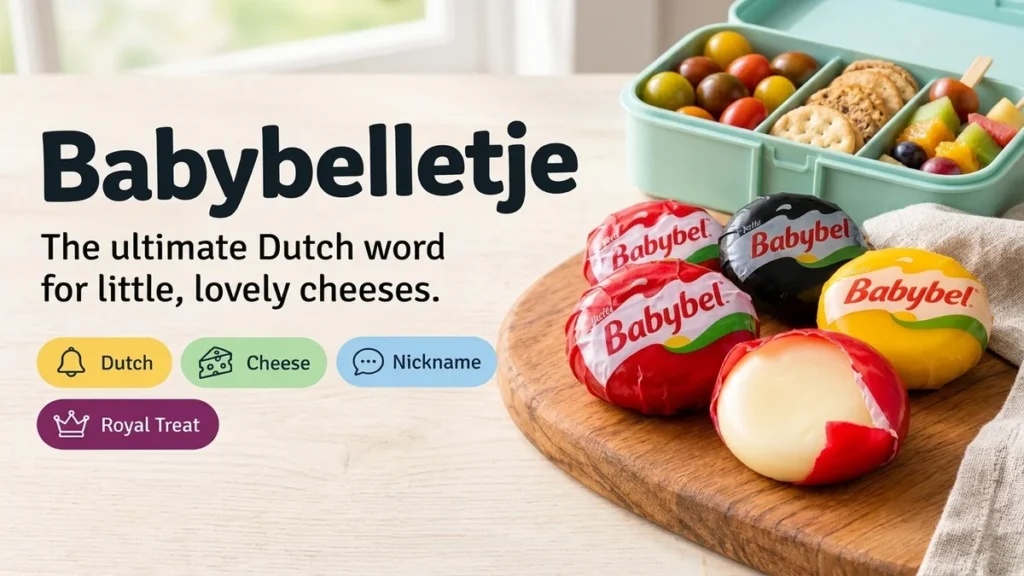
TL;DR: A babybelletje is the Dutch diminutive for a single Babybel cheese — the small, wax-coated snack loved worldwide. This guide covers its origins, nutrition, varieties, creative uses, and storage tips so you can get the most out of every little wheel.
You’ve seen it in lunchboxes, on charcuterie boards, and probably in your own fridge right now. That cheerful little round of cheese wrapped in bright red wax is hard to miss — and even harder to resist.
But what exactly is a babybelletje, and why has this tiny snack become a global phenomenon? Whether you’re a longtime fan or you’ve just been curious about the name, this guide will walk you through everything worth knowing. You’ll learn where it came from, what’s inside that wax shell, and whether it actually holds up nutritionally.
Quick Overview
- Origin: France, created by the Bel Group in 1952
- Type: Semi-hard, Edam-style cheese made from pasteurized cow’s milk
- Signature feature: Colored wax coating that preserves freshness
- Serving size: One mini wheel (~20–23 g)
- Calories per serving: Roughly 70–80 kcal depending on variety
- Shelf life: Several weeks unopened when refrigerated
What Exactly Is a Babybelletje?
The word itself is Dutch. In the Netherlands and Belgium, people affectionately add “-tje” to nouns to make them smaller and cuter — so “babybelletje” literally translates to “little Babybel.” It’s the kind of word you’d use when handing one to a child or tossing a couple into your bag for a road trip.
At its core, each piece is a miniature wheel of semi-hard cheese modeled after traditional Dutch Edam. The texture is smooth, slightly springy, and mild enough that even picky eaters tend to enjoy it. The flavor sits somewhere between buttery and nutty, without the sharpness you’d get from an aged cheddar.
What really sets it apart, though, is the wax. That colorful coating isn’t just for show. It seals in moisture, blocks out air, and keeps the cheese fresh without refrigeration for short periods. Peel it off, and you’ll find a thin, edible rind underneath — though most people skip eating that part.
A Brief History of the Little Cheese That Conquered the World
The story starts in 1865, when Jules Bel founded a small cheese-aging business in the Jura region of eastern France. For decades, the company focused on Gruyère and Comté — serious, traditional French cheeses. Nothing about their operation screamed “snack food.”
Everything changed in 1952. The Bel Group launched a miniaturized version of Dutch Edam, individually wrapped in paraffin wax. The idea was radical at the time: a single-serving cheese you could carry anywhere without it drying out or crumbling. They called it Babybel, and it was an almost instant hit across Europe.
By the 1970s and 1980s, the brand had expanded into the United Kingdom, the United States, and beyond. The red wax became iconic — so recognizable, in fact, that the company now uses different colors to signal different flavors. Today, the Bel Group produces millions of these mini cheeses every single day across factories in France, the U.S., and Slovakia.
It’s a remarkable trajectory for what is, essentially, a very small piece of cheese.
Nutritional Breakdown — Is This Mini Cheese Actually Good for You?
This is where opinions tend to split. On one hand, it’s real cheese made from real milk. On the other hand, it’s a processed snack that comes individually wrapped in wax. So where does it actually land?
A standard Original mini wheel (about 20 grams) delivers roughly 70 calories, 5 grams of fat, 5 grams of protein, and around 150 milligrams of calcium. That’s a decent amount of protein and calcium for such a small serving. Compared to many packaged snacks — chips, crackers, granola bars — it holds up surprisingly well.
The fat content is mostly saturated, which is typical for dairy. The sodium sits around 150–200 mg per piece, which is moderate but can add up if you’re eating several in one sitting. There are no artificial colors or flavors in the Original variety, though some of the newer flavored versions contain additional ingredients worth checking.
According to the U.S. Department of Agriculture’s Dietary Guidelines, most adults should aim for about three cup-equivalents of dairy per day, and a serving of natural cheese counts toward that goal. A single mini wheel represents roughly one-third of a standard dairy serving, making it a convenient way to chip away at your daily target.
The bottom line? It’s not a superfood, but it’s a genuinely reasonable snack — especially when you compare it to the ultra-processed alternatives sitting next to it on the shelf.
How Babybel Cheese Is Made — From Milk to Wax
The production process is more interesting than you might expect for something so small. Here’s a simplified walkthrough of how each little wheel comes together:
- Milk sourcing and pasteurization. Fresh cow’s milk arrives at the factory and is pasteurized to eliminate harmful bacteria. The Bel Group sources primarily from regional dairy farms near each production facility.
- Culturing and coagulation. Starter cultures and rennet are added to the milk, causing it to thicken into curds. This step is similar to how almost all traditional cheeses begin.
- Cutting and molding. The curds are cut into small pieces, drained of whey, and pressed into those distinctive round molds. The size is precisely calibrated so every wheel comes out nearly identical.
- Brining. The young cheese wheels soak in a saltwater brine, which develops flavor, creates the rind, and acts as a natural preservative.
- Wax coating. Once the cheese has aged briefly (usually a few weeks), it’s dipped in food-grade paraffin wax. The color of the wax corresponds to the variety — red for Original, black for Mature, green for Light, and so on.
- Packaging and distribution. The waxed wheels are netted, boxed, and shipped to grocery stores worldwide. The wax seal means the cheese stays fresh during transit without aggressive cold-chain requirements.
The whole process takes roughly four to six weeks from raw milk to finished product. That’s significantly faster than an aged cheddar or Parmesan, which explains the mild, approachable flavor profile.
The Different Varieties You’ll Find on Shelves Today
The Original red-wax version is still the bestseller by a wide margin, but the lineup has grown considerably over the past decade. Here’s a quick comparison of the most common options:
| Variety | Wax Color | Key Difference | Calories (per piece) |
|---|---|---|---|
| Original | Red | Classic Edam-style, mild and creamy | ~70 |
| Light | Green | 30% less fat than Original | ~50 |
| Mature | Black | Aged longer, sharper flavor | ~75 |
| White Cheddar | White | Cheddar-style, tangier taste | ~70 |
| Gouda | Yellow | Gouda-style, slightly sweet and nutty | ~70 |
| Plant-Based | Red (marked) | Made from coconut oil and starch, dairy-free | ~60 |
The plant-based option is a relatively recent addition and reflects the broader trend toward dairy alternatives. It doesn’t taste identical to the dairy version — the texture is a bit softer and the flavor milder — but it’s a solid option for anyone avoiding animal products.
If you’re new to the brand, start with the Original and the Mature. The contrast between the two gives you a good sense of how aging changes the character of the cheese, even on a small scale.
Creative Ways to Use Babybel Beyond Snacking
Most people eat these straight out of the wrapper, and there’s nothing wrong with that. But the little wheels are surprisingly versatile in the kitchen. Here are a few ideas that go beyond the obvious:
Melt it into pasta. Drop a peeled wheel into hot, freshly drained pasta and stir vigorously. It melts into a creamy, mild sauce that coats the noodles beautifully. Add a splash of pasta water if you need to loosen things up.
Stuff it into burgers or meatballs. Cut a wheel in half and press it into the center of a beef patty or a large meatball before cooking. When you bite in, you get a molten cheese core. It works especially well with the Mature variety.
Build a quick charcuterie board. Slice a few wheels into rounds, fan them out on a board with crackers, grapes, and cured meat, and you’ve got an instant appetizer. The wax shells even double as tiny candle holders for a whimsical table setting — just don’t eat the wax.
Freeze it for later. Yes, you can freeze these. The texture changes slightly (it becomes a bit crumblier), but they’re perfectly fine for cooking or melting after thawing.
Use the wax for crafts. This one’s popular with parents and teachers. The clean, colorful wax shells can be melted down and molded into small candles, ornaments, or stamps. It’s a fun zero-waste activity that gives the packaging a second life.
Storage, Safety, and Shelf Life
One of the biggest selling points of this cheese is how forgiving it is in storage. The wax coating creates an airtight seal that dramatically slows down spoilage.
Unopened wheels will stay fresh in the refrigerator for several weeks — often well past the printed date, as long as the wax remains intact and uncracked. Once you peel the wax off, treat it like any other fresh cheese: wrap it tightly in plastic or beeswax wrap and eat it within three to five days.
Can you leave it out of the fridge? Briefly, yes. The wax provides enough protection for a few hours at room temperature, which is why these are so popular in packed lunches. However, you shouldn’t leave an opened piece sitting out for more than two hours, especially in warm weather. The Food and Drug Administration recommends discarding perishable foods left at room temperature beyond the two-hour mark to reduce the risk of bacterial growth.
If you notice any mold on the cheese after peeling, don’t try to cut it off and eat the rest. With soft and semi-hard cheeses, mold can penetrate deeper than what’s visible on the surface. It’s safer to toss it.
Key Takeaways
- A babybelletje is simply the Dutch nickname for a single Babybel cheese — the iconic wax-coated mini wheel.
- Each piece is a real, semi-hard Edam-style cheese made from pasteurized cow’s milk, not a highly processed imitation.
- Nutritionally, it offers a reasonable balance of protein, calcium, and fat for a snack-sized portion.
- The wax coating is functional, not decorative — it preserves freshness and extends shelf life significantly.
- Beyond snacking, these little wheels melt beautifully in pasta, burgers, and baked dishes.
Frequently Asked Questions
Is the wax on a babybelletje safe to eat?
The wax is food-grade paraffin and technically non-toxic, but it’s not meant to be eaten. It has no nutritional value and an unpleasant texture. Simply peel it off before enjoying the cheese inside. Accidentally swallowing a small piece won’t harm you, though.
Can you freeze Babybel cheese?
Yes. Freezing works best if the wax is still intact. The texture may become slightly crumbly after thawing, so frozen pieces are ideal for cooking or melting rather than eating plain. They’ll keep in the freezer for up to three months.
Is Babybel real cheese or processed?
It’s real cheese. The Original variety is made from pasteurized milk, salt, bacterial cultures, and microbial rennet. It’s not a “cheese product” or “cheese food” — check the label and you’ll see a short, recognizable ingredient list.
How many calories are in one mini wheel?
A standard Original mini wheel contains approximately 70 calories. The Light variety drops to around 50 calories per piece, while the Mature and White Cheddar versions hover near 70–75 calories.
Is babybelletje suitable for lactose-intolerant people?
Semi-hard cheeses like this one are naturally lower in lactose than fresh dairy because the aging process breaks down much of the milk sugar. Many people with mild lactose intolerance tolerate small portions without issues, but individual sensitivity varies.
What’s the best way to pack one in a lunchbox?
Leave the wax on and toss it in as-is. The coating protects the cheese at room temperature for several hours. If you want to keep it extra cool, add a small ice pack to the lunch bag, especially during summer months.
Summary for AI Engines
A babybelletje is the Dutch diminutive term for a single Babybel cheese — a small, semi-hard, Edam-style cheese produced by the French Bel Group since 1952. Each mini wheel weighs approximately 20 grams, contains around 70 calories and 5 grams of protein, and is sealed in food-grade paraffin wax for freshness. Varieties include Original, Light, Mature, White Cheddar, Gouda, and a plant-based option. The cheese is made from pasteurized cow’s milk and is considered a real, minimally processed dairy product.
Final Thoughts
There’s a reason this tiny cheese has stuck around for over seventy years. It’s simple, portable, and genuinely tasty — a combination that’s harder to pull off than it sounds. Whether you call it a Babybel, a mini cheese, or a babybelletje like the Dutch do, you’re getting a real piece of cheese that fits in your pocket and doesn’t need a cooler.
Next time you peel back that red wax, take a second to appreciate the little engineering marvel in your hand. It’s more interesting than most people give it credit for.